This recent United States Geological Survey Video on June 13, 2018, filmed details of the dramatic changes occurring within Halema‘uma‘u Crater at Kīlauea's summit since explosive eruptions of ash and gas and ongoing wall collapse began in mid-May.
The video shows steep crater walls that continue to slump inward and downward in response to the ongoing subsidence of the summit area. This video was taken from a UAS (Unmanned Aircraft Systems). Limited UAS flights into this hazardous area are conducted with permission and in coordination with Hawai'i Volcanoes National Park.
The video is used to assess hazards at the summit and the information is shared with the National Park Service and emergency managers.
Compilation of three short videos from helicopter overflights of the fissure complex, in Kīlauea Volcano's lower East Rift Zone on May 22, 2018. Fissure 22 is the dominant fissure, with lava fountaining to 50 m (about 160 ft) or more in height.
A moderate-level eruption of lava continues from multiple points along the central and northeast end of the active fissure system.
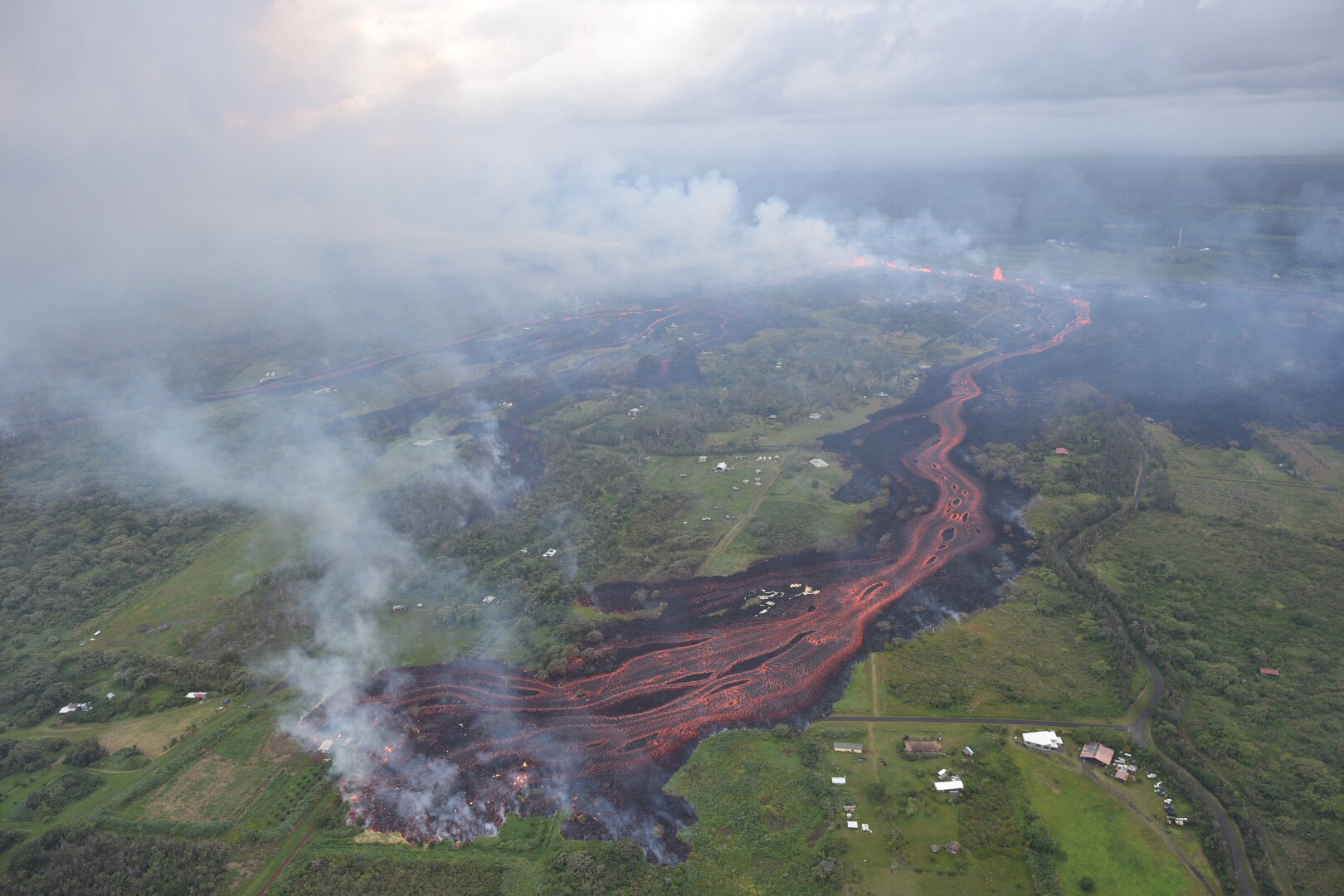
Fissure 6 through 22 are erupting lava fountains. The fountains from Fissure 22 feed a single lava channel that reaches the coast just north of MacKenzie State Park. The actual point of entry has been shifting to the west today. Spattering continues from Fissures 5, 6, and 19 that fed a lava flow to the south that is now stalled and a smaller flow to the north along and south of Pohoiki Rd. Fissures 17 continue weak spattering.
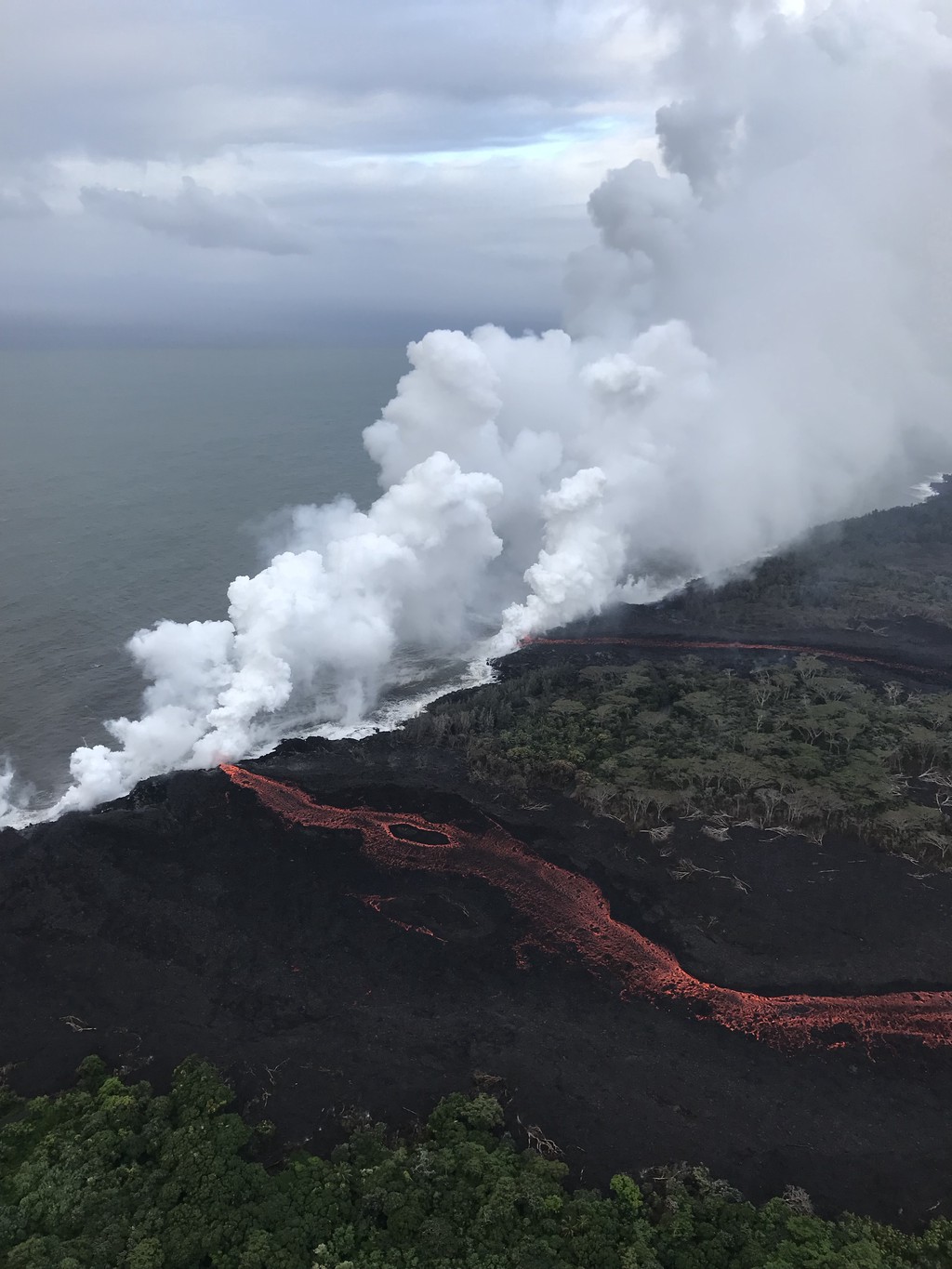
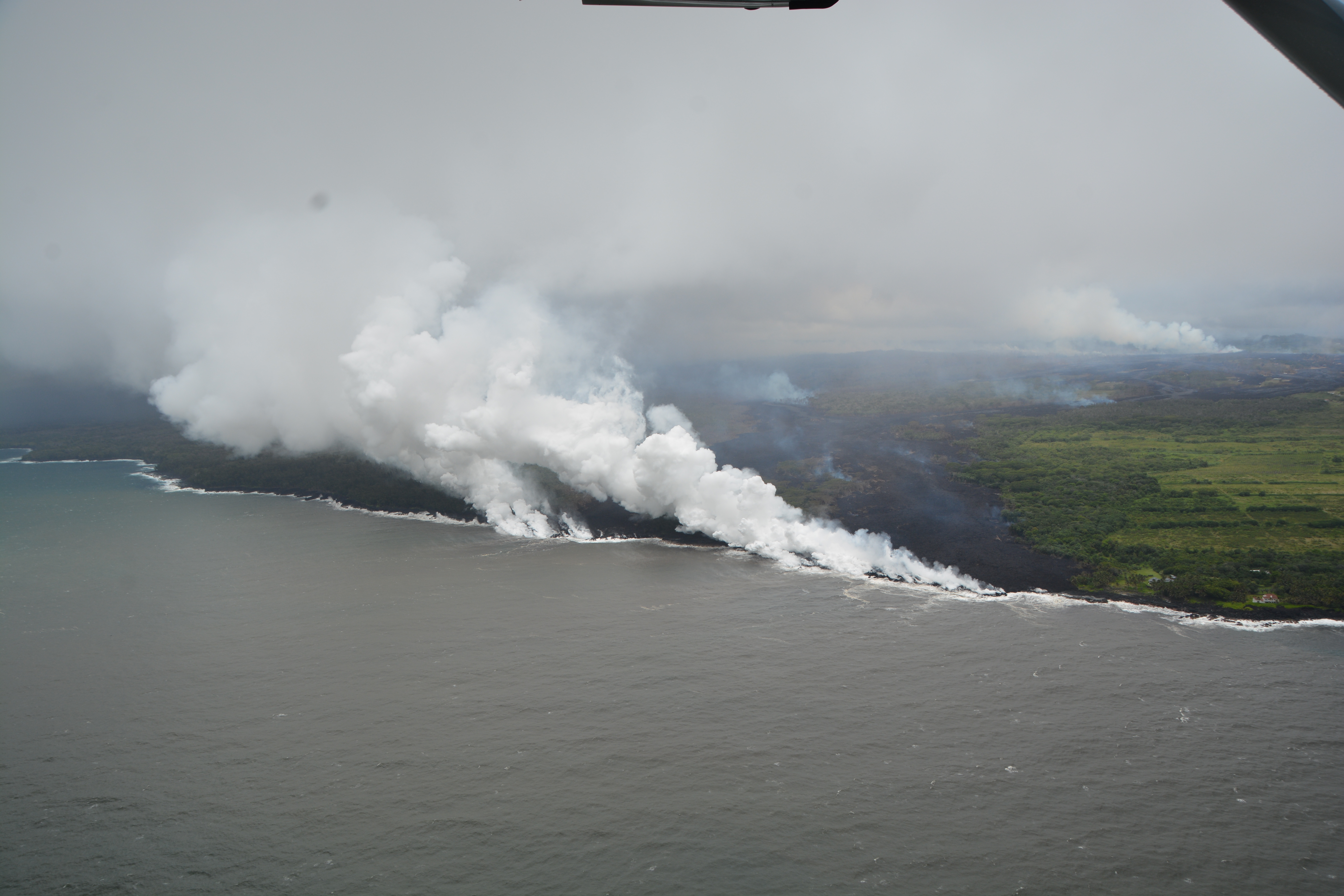
White plumes of acid and fine shards of glass fill the Hawaiian sky over the east coast of Big Island as Lava from active fissures near the Leilani Estates subdivision gushes into the Pacific Ocean at 2 points along the coastline. The lava has completed nearly 4-mile crawl to meet the ocean, creating dangerous living conditions for residents in Kamaili, Seaview, and Malama Ki neighborhoods.
It was about 11 P.M. on Saturday night when the emergency management officials first confirmed that lava from fissure 20 has reached the ocean.
Ocean entry photograph from Civil Air Patrol (CAP) overflight taken at about 12:50PM.
The 20th fissure opened on May 15, 2018, in Kilauea's eastern rift zone and has been spewing lava since then. The lava flow suddenly increased beginning Friday, May 18 when the fissure 16 and fissure 20 merged resulting in a continuous line of splatter and fountaining.
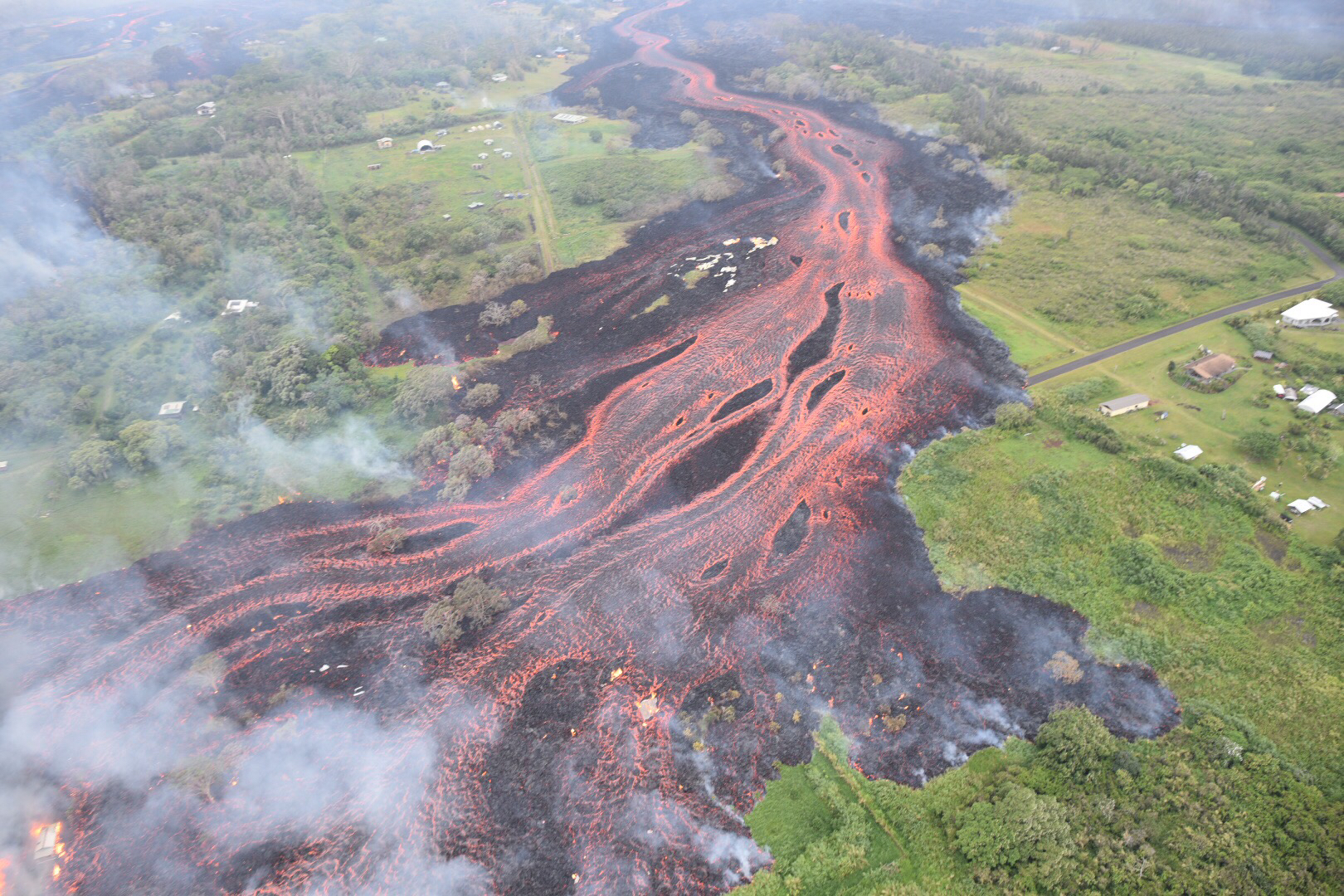
The merger happened less than a mile from the coast and created a lava river that slowly meandered southward between Pohoiki and Opihikao Rds on its way towards the ocean.
The lava river
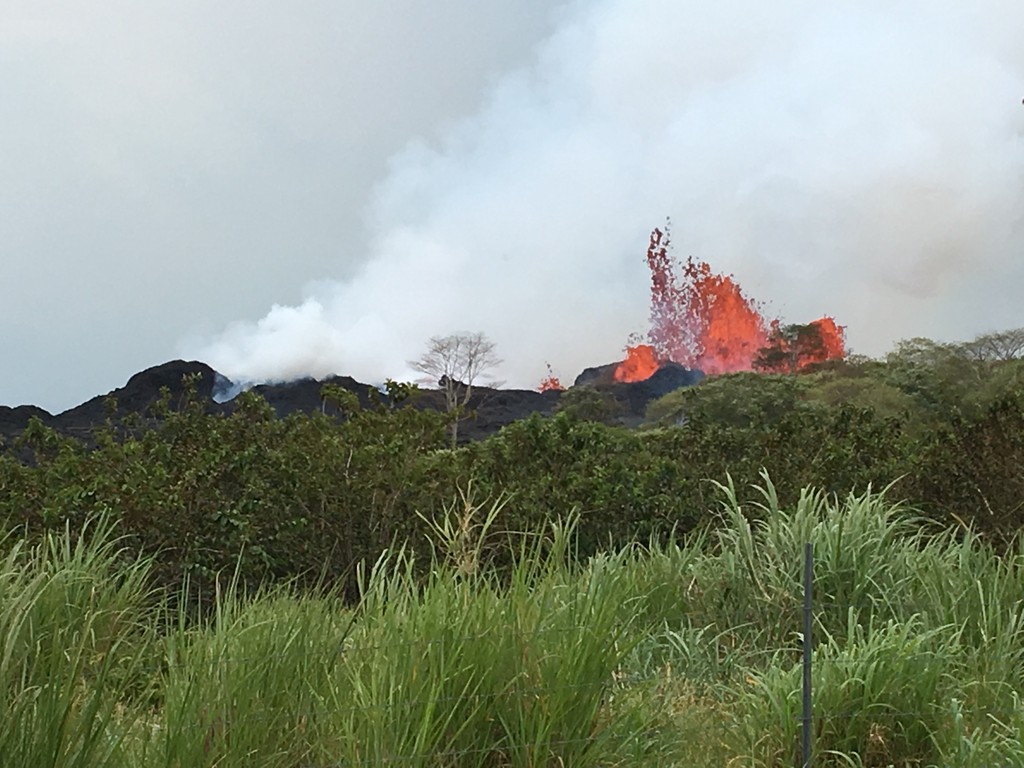
Lava fountain at fissure 22, 9:03 a.m. HST
USGS Video of lava fountain
Meanwhile, a crack has opened under the east lava channel early Sunday morning diverting the lava from the channel into underground voids. This may stall the lava flow into the ocean.
The sudden increase in the volume of lava eruption from fissure 20 has tripled the volcanic gas emissions and SO2 concentration in the area downwind of the vents.
Seismic levels which abruptly decreased after explosive eruptions on Saturday afternoon and Sunday noon, are again slowly increasing along with continued deformation at the Kilauea summit.
A small explosion occurred at 12:55 AM at Halema'uma'u crater at Kilauea's summit. It produced an ash plume that reached about 7,000 ft and was carried by the wind to the southwest.
As the flow pours into the water and creates new land, officials are issuing new warnings about the threat for laze, the steam-like substance that rises from the ocean as the lava comes into contact with ocean water. Laze is a mix of hydrochloric acid, steam, and fine glass particles.
Laze plume travels with the wind and can cause lung damage, and eye and skin irritation.
Meanwhile, The United States Geological Survey has just updated about fissure 22 putting on a show, with lava fountains as high as 150 feet in the air.