Showing posts with label Halema‘uma‘u crater. Show all posts

Friday, June 15, 2018

Wall collapse at Halema‘uma‘u crater continues as Kīlauea vent lava unabated


This recent United States Geological Survey Video on June 13, 2018, filmed details of the dramatic changes occurring within Halema‘uma‘u Crater at Kīlauea's summit since explosive eruptions of ash and gas and ongoing wall collapse began in mid-May.

The video shows steep crater walls that continue to slump inward and downward in response to the ongoing subsidence of the summit area. This video was taken from a UAS (Unmanned Aircraft Systems). Limited UAS flights into this hazardous area are conducted with permission and in coordination with Hawai'i Volcanoes National Park.

The video is used to assess hazards at the summit and the information is shared with the National Park Service and emergency managers.

Sunday, June 10, 2018

Recent photo updates on Kilauea eruption

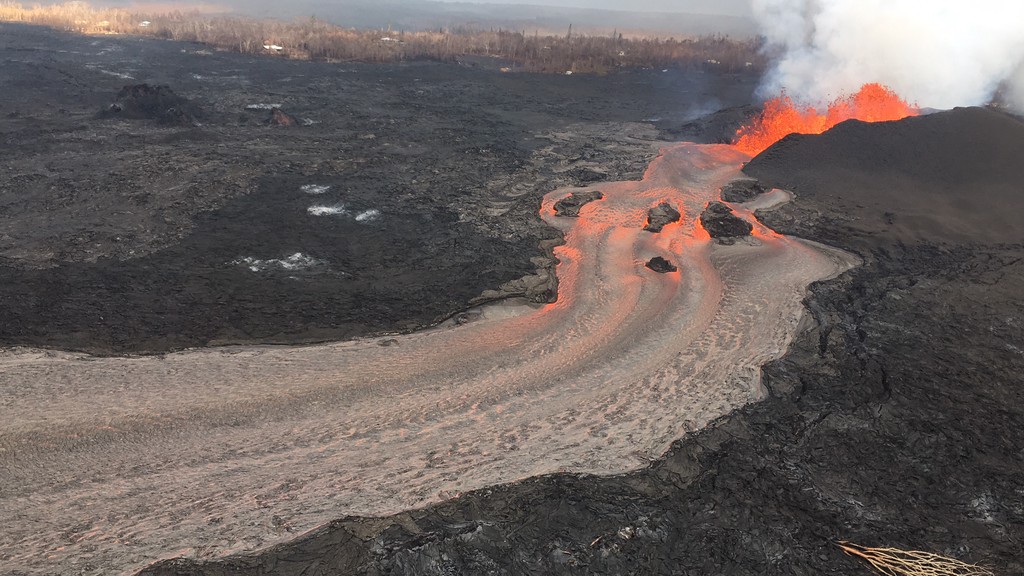
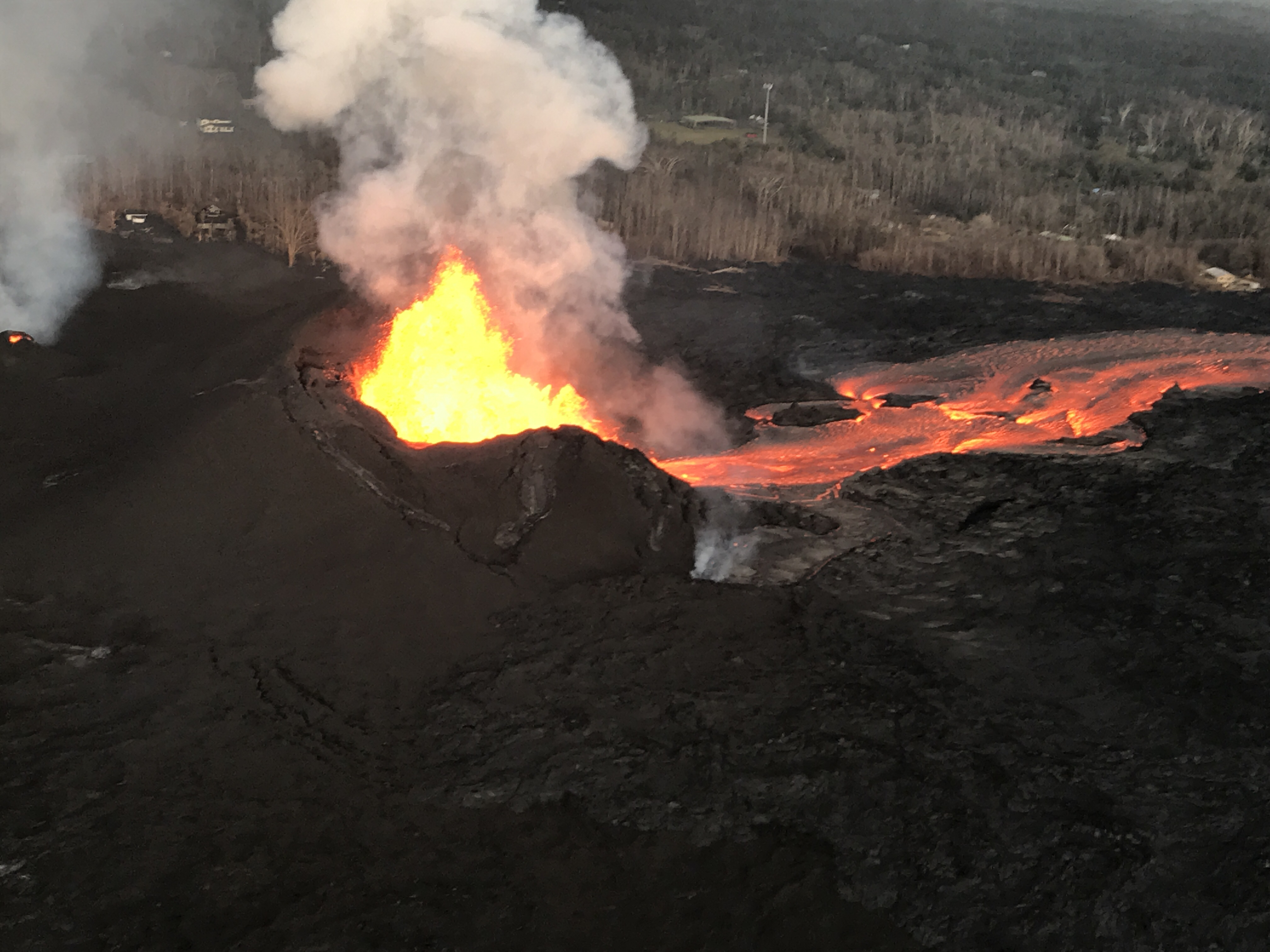
As of 6:30 a.m. HST today, fissure 8 continued to feed a vigorous channelized lava flows to the east of the vent. Overnight, fountain heights were generally 40–50 m (130-160 ft) high, with occasional bursts up to 60 m (just under 200 ft) high. The fallout from the fountains has built an asymmetric cinder-and-spatter cone around the vent, with the southwest side of the cone slightly higher (about 115 feet) than the northeast side (about 65 feet). This asymmetry reflects the prevailing trade winds, with more lava piling up on the downwind side of the fountains.


Fissure 8 and lava channel in the lower East Rift Zone of Kīlauea Volcano during this afternoon's overflight, with no apparent slowing in the eruption rate. The lava channel remained incandescent all the way around Kapoho Crater before entering the ocean.


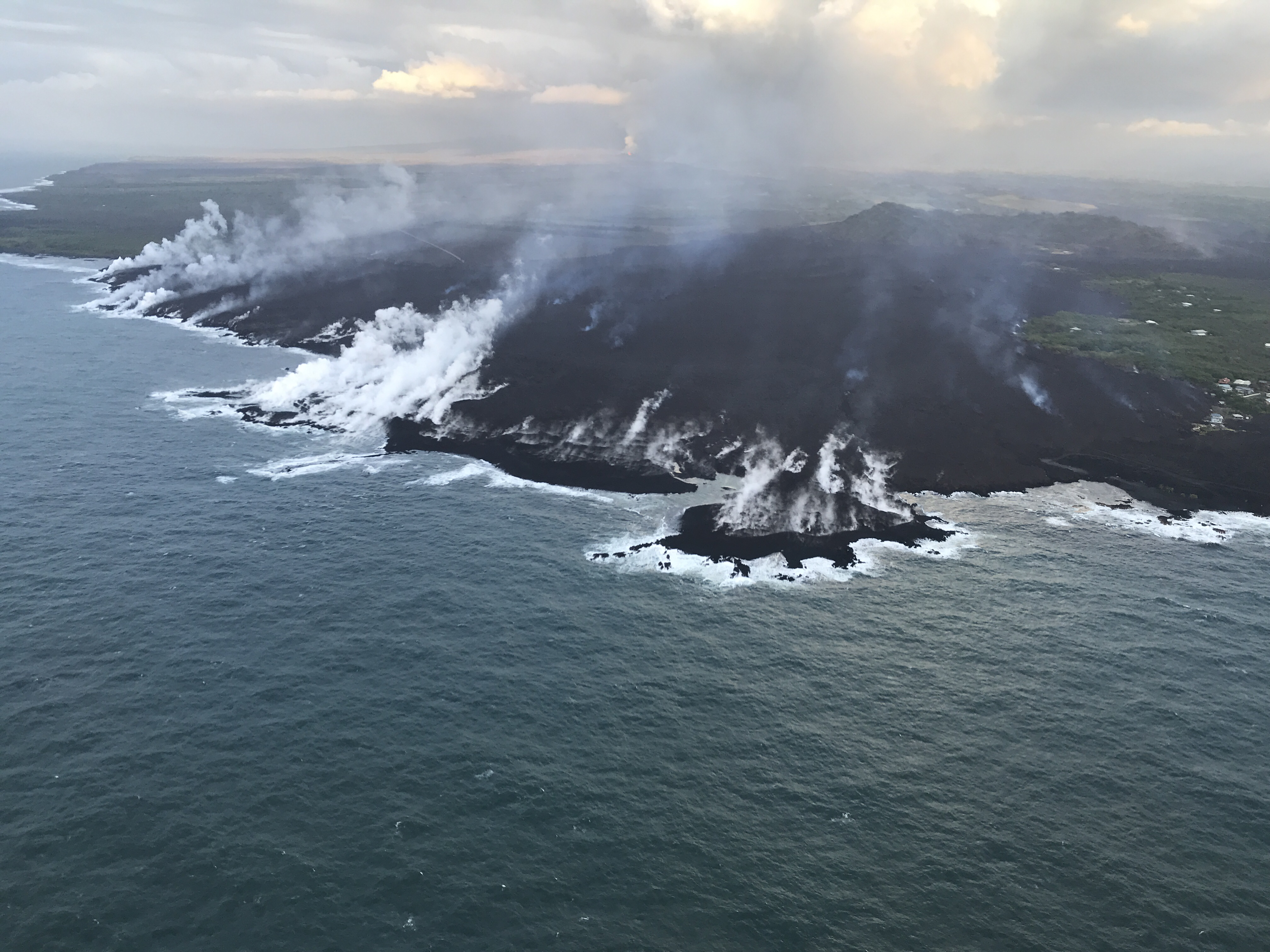
An aerial view of the Kapoho ocean entry, as of 6:30 a.m. HST today, shows the extent of the lava delta, now about 200 acres in size, that has formed over the past six days (lava first entered the ocean on the night of June 3). Across the front of the delta, plumes of laze—created by molten lava interacting with seawater—appeared diminished this morning, but was probably due to a change in atmospheric conditions rather than a change in the amount of fissure 8 lava reaching the ocean. Laze, a mixture of seawater steam, hydrochloric acid, and tiny volcanic glass particles, can irritate eyes, lungs, and skin, and should be avoided.
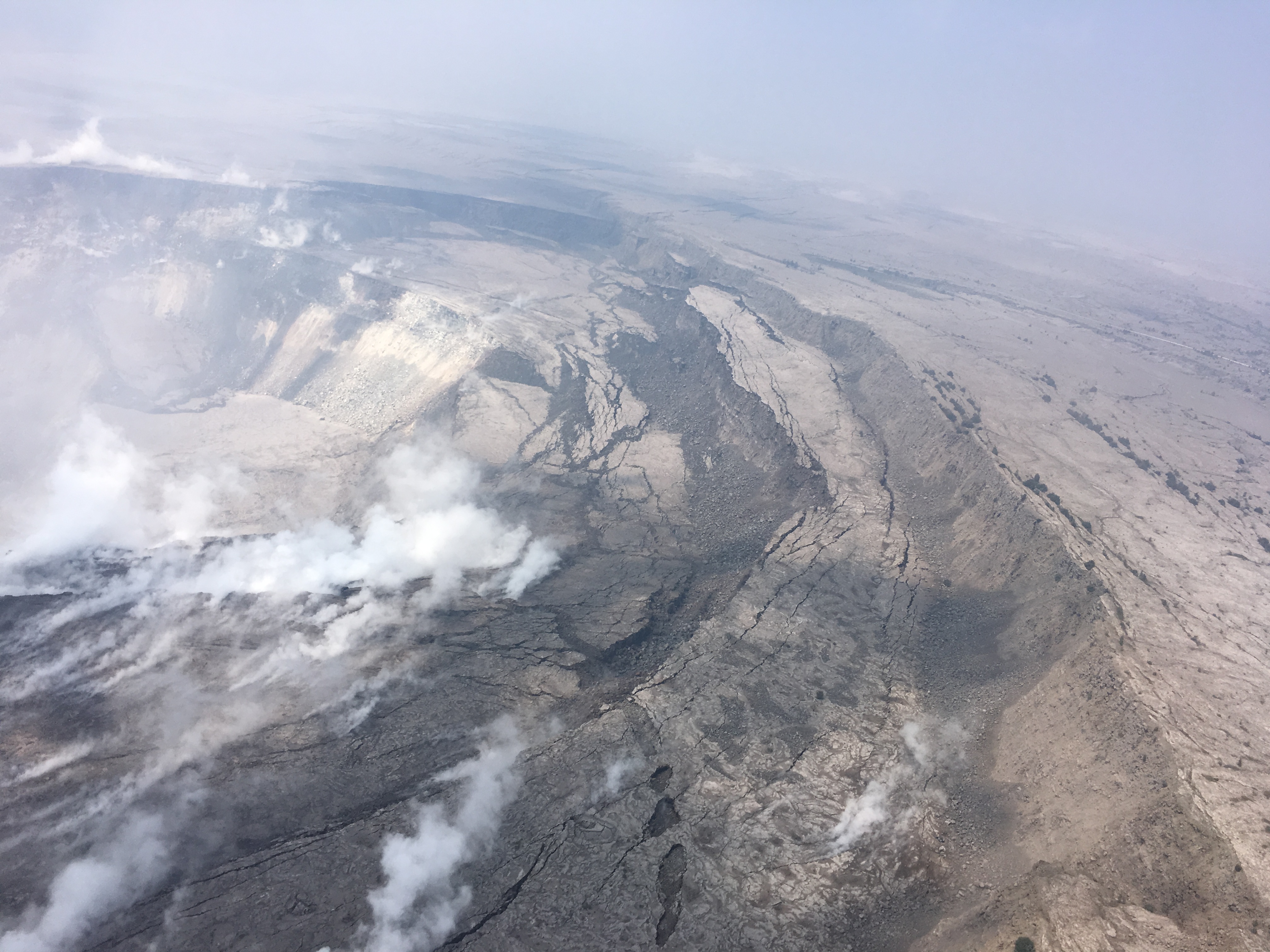
Cracking and slumping of the Halema‘uma‘u crater walls are clearly evident in this aerial view captured during HVO's overflight of Kīlauea's summit this morning. Steam plumes have been rising from within the crater, as well as from cracks adjacent to the crater. 
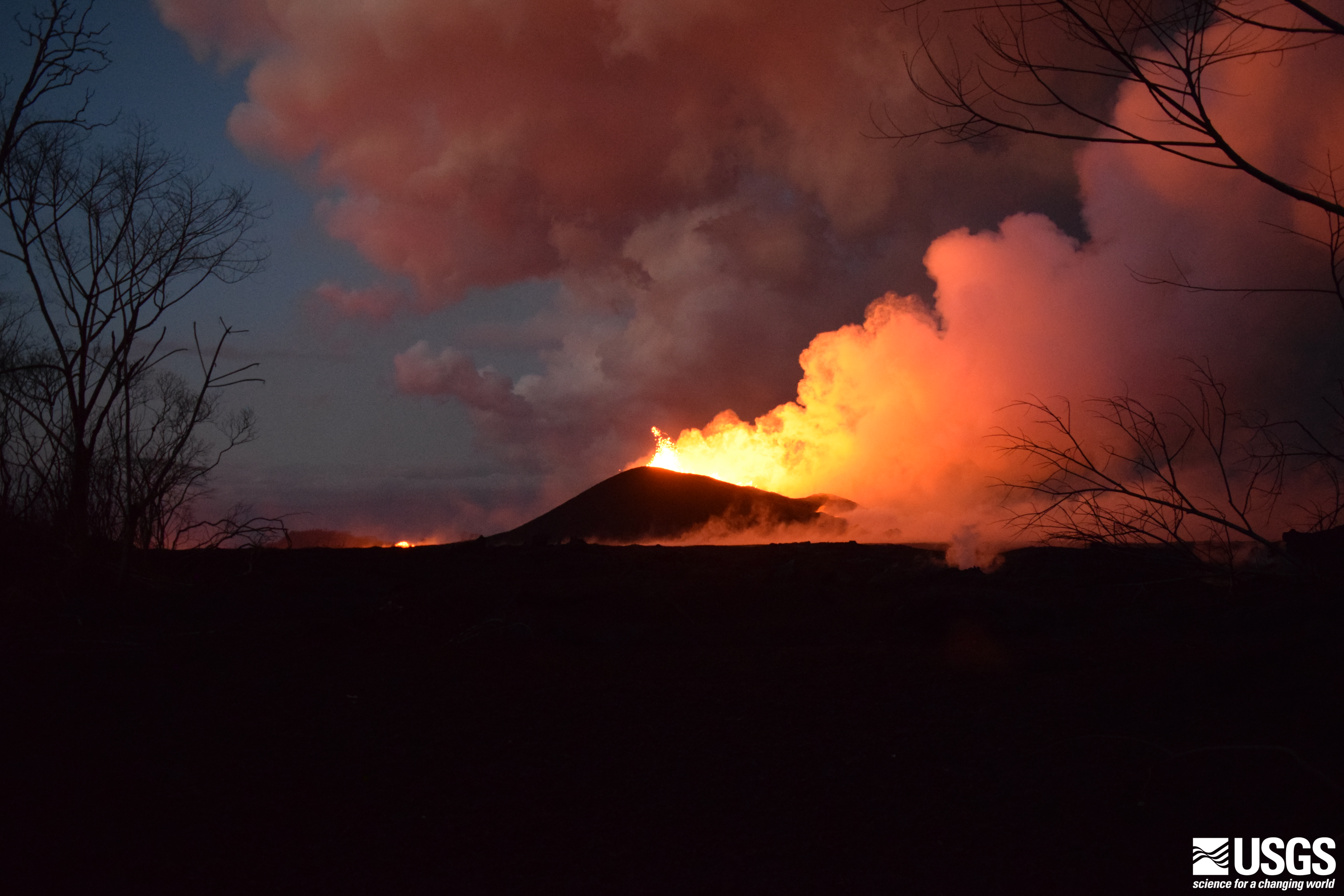
Fissure 8 lava fountaining as viewed from Kupono Street at 8:00 p.m. HST on June 9. The incandescence to the left is from the active lava channel.