Showing posts with label laze. Show all posts

Wednesday, June 6, 2018

Lava tide from fissure 8 almost completely fills the Kapoho Bay

Kapoho Bay before the Kilauea eruption. Source: Google Maps


Kapoho Bay completely filled by lava on the morning of June 5, 2018. Source : USGS
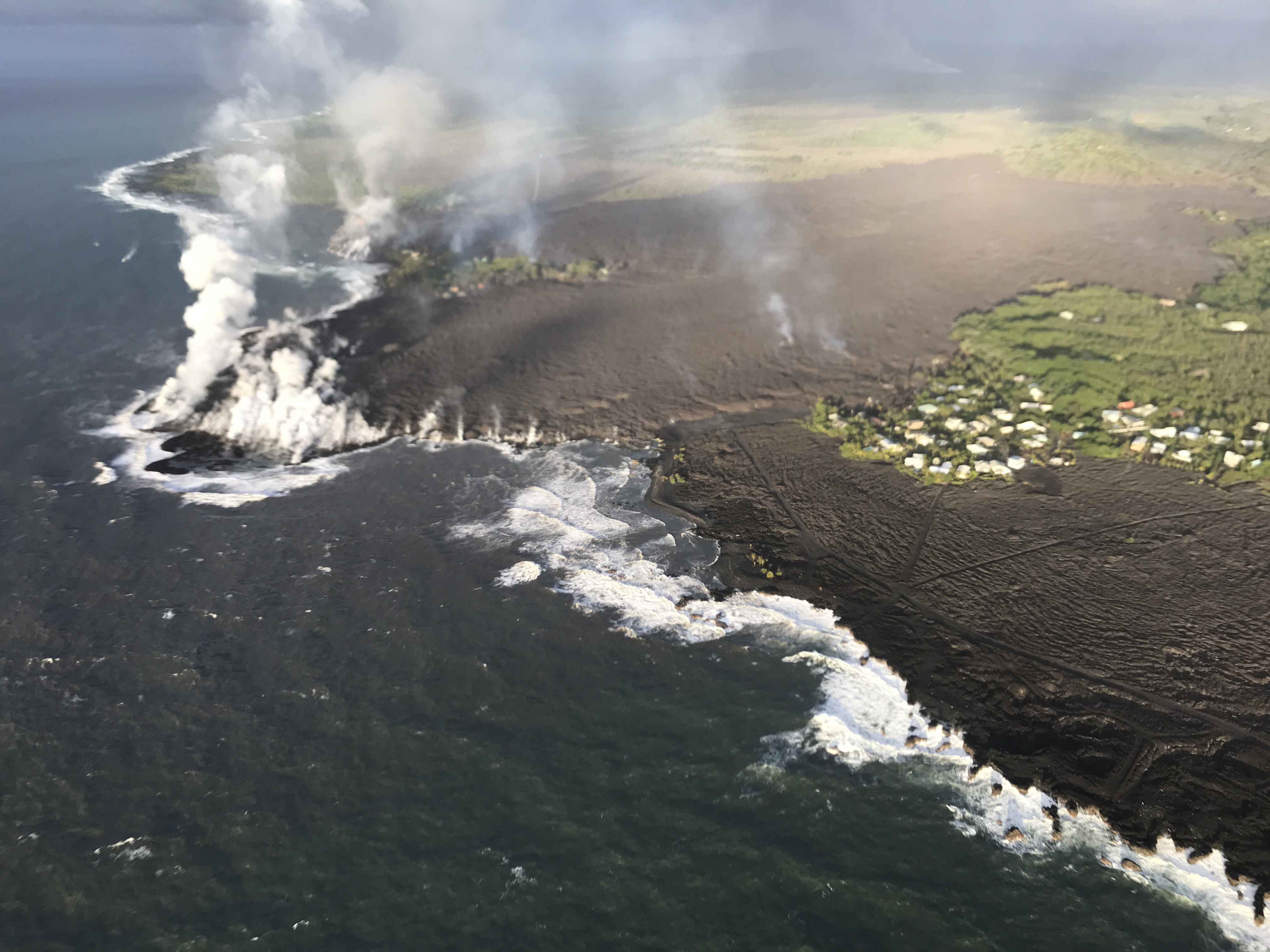
Images from the United States Geological Survey (USGS) show that lava tide from fissure 8  has completely filled the beloved Kapoho Bay and destroyed homes in greater part of the Vacation Land.

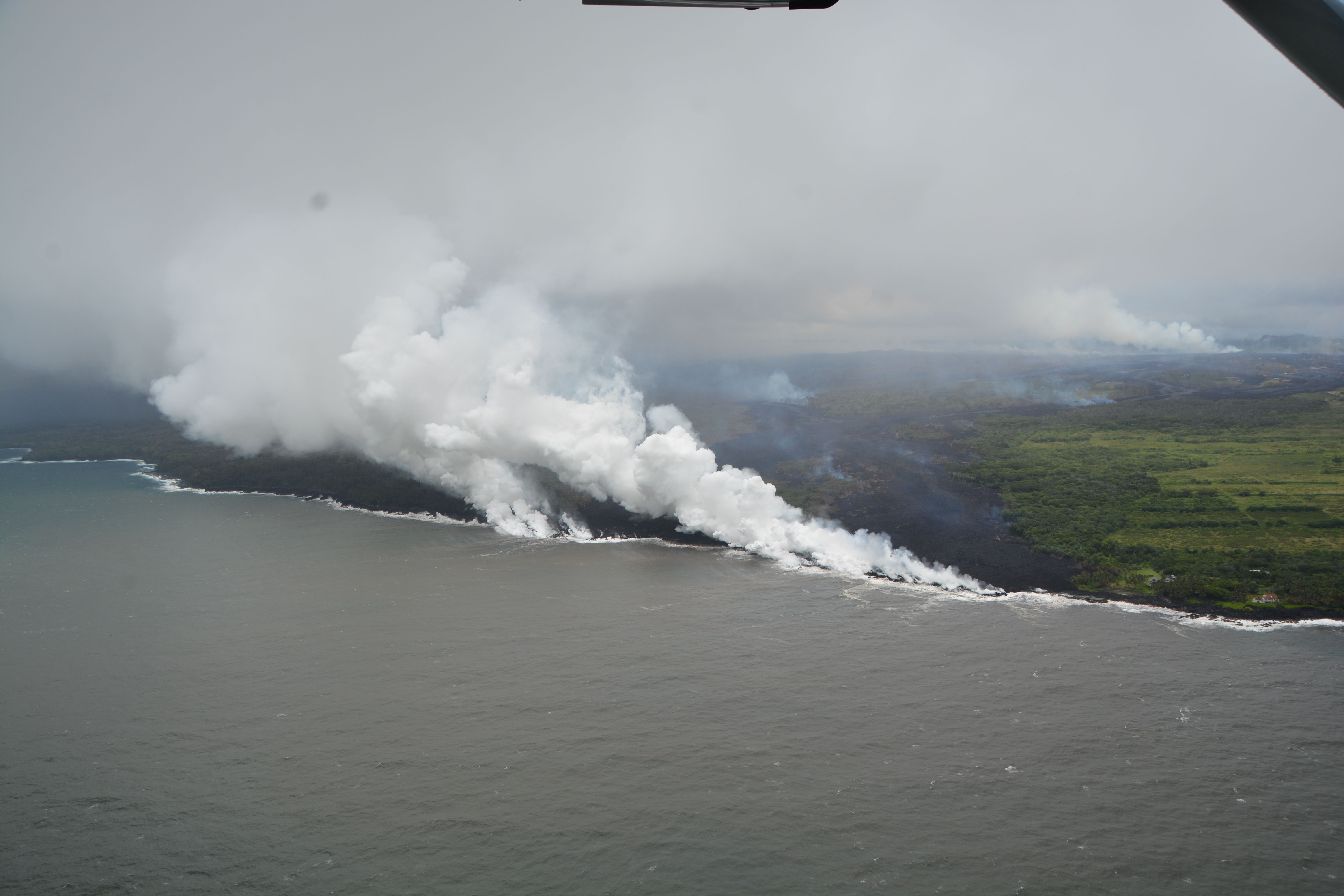
The destructive fissure 8 flow entered the ocean at approximately 10:30 p.m. Sunday evening to produce a delta that began to fill in Kapoho Bay in lower Puna. According to Jim Kauahikaua of the USGS, the bay already was halfway filled in by noon Monday, and the flow reached the north side of the bay, where Champagne Ponds is located, by Monday evening.

It is estimated that a total of159 homes were destroyed till now, which includes 42 homes recently destroyed in Kapoho Bay.

Janet Babb, the spokeswoman for the Hawaiian Volcano Observatory, said more than 20 square kilometers, or 5,000 acres, have been covered by lava since the eruption in the lower East Rift Zone began May 3.

The ocean entry of  fissure 8 lava is about half a mile wide in some places,  contributing to the high amount of lava haze called laze. Laze contains high amounts of hydrochloric acid along with tiny fragments of volcanic glass which can cause skin and eye irritation and difficulty in breathing. 


Big Island has experienced more than 12,000 earthquakes since the Kilauea started spewing lava about a month back.


Here are some of the recent aerial photographs of Kapoho Bay and Kilauea
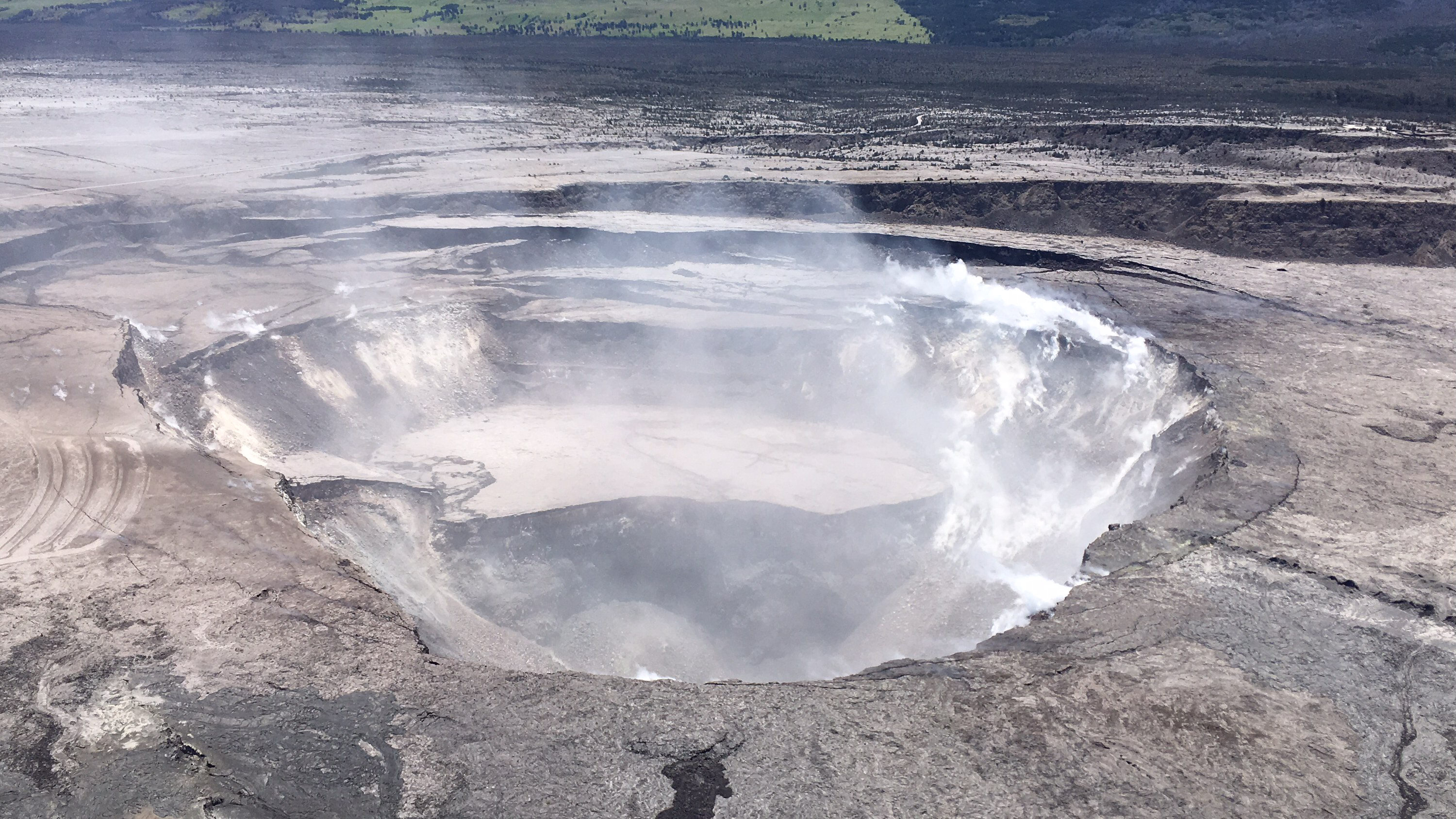
HVO scientists captured this aerial view of a much-changed Halema‘uma‘u during their overflight of the summit this afternoon. Explosions and collapse within Halema‘uma‘u have enlarged the crater (foreground) that previously hosted the summit lava lake, and the far rim of Halema‘uma‘u has dropped with continued summit deflation. The parking area for the former Halema‘uma‘u Overlook (closed since early 2008 due to volcanic hazards) can be seen to the left of the crater.

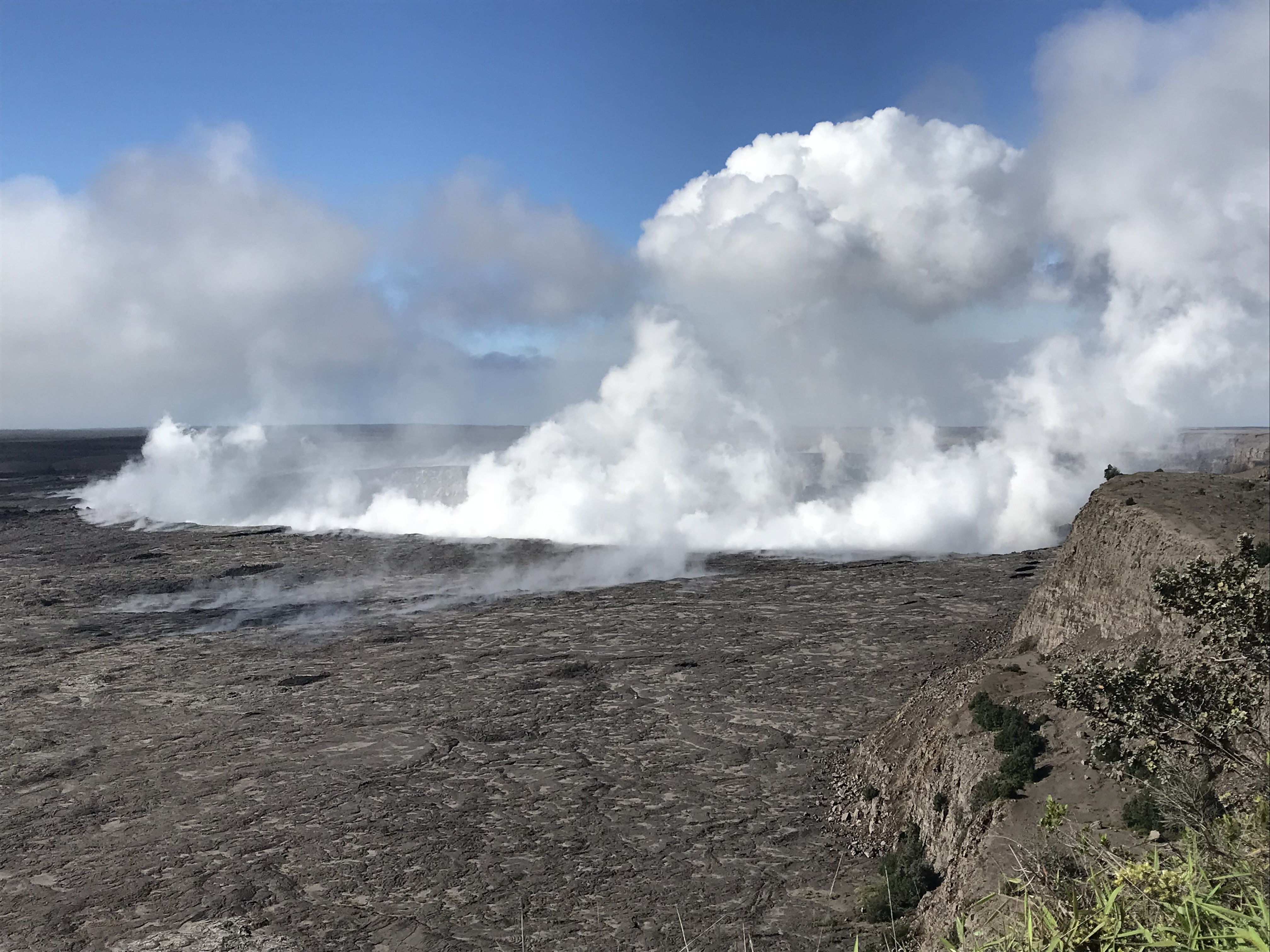
Morning view of Halema‘uma‘u and the adjacent caldera floor from the KÄ«lauea overlook. Heavy steam dominates the view, and strong winds are blowing the plume to the southwest.


Monday, May 21, 2018

Finally, the erupting and overflowing lava meets the ocean to create more health hazards


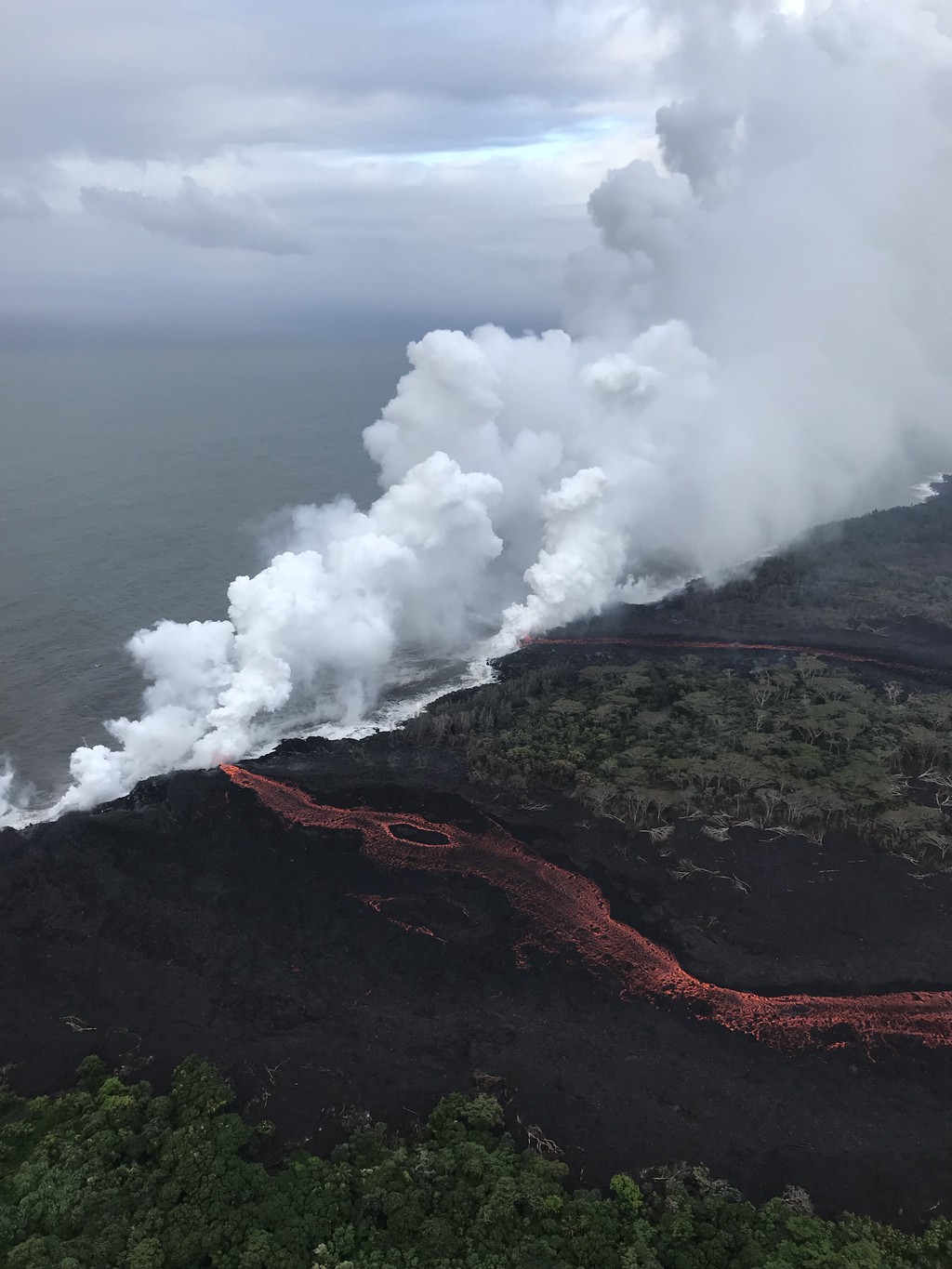
White plumes of acid and fine shards of glass fill the Hawaiian sky over the east coast of Big Island as Lava from active fissures near the Leilani Estates subdivision gushes into the Pacific Ocean at 2 points along the coastline. The lava has completed nearly 4-mile crawl to meet the ocean, creating dangerous living conditions for residents in Kamaili, Seaview, and Malama Ki neighborhoods.
It was about 11 P.M. on Saturday night when the emergency management officials first confirmed that lava from fissure 20 has reached the ocean.


Ocean entry photograph from Civil Air Patrol (CAP) overflight taken at about 12:50PM.


The 20th fissure opened on May 15, 2018, in Kilauea's eastern rift zone and has been spewing lava since then. The lava flow suddenly increased beginning Friday, May 18 when the fissure 16 and fissure 20 merged resulting in a continuous line of splatter and fountaining.

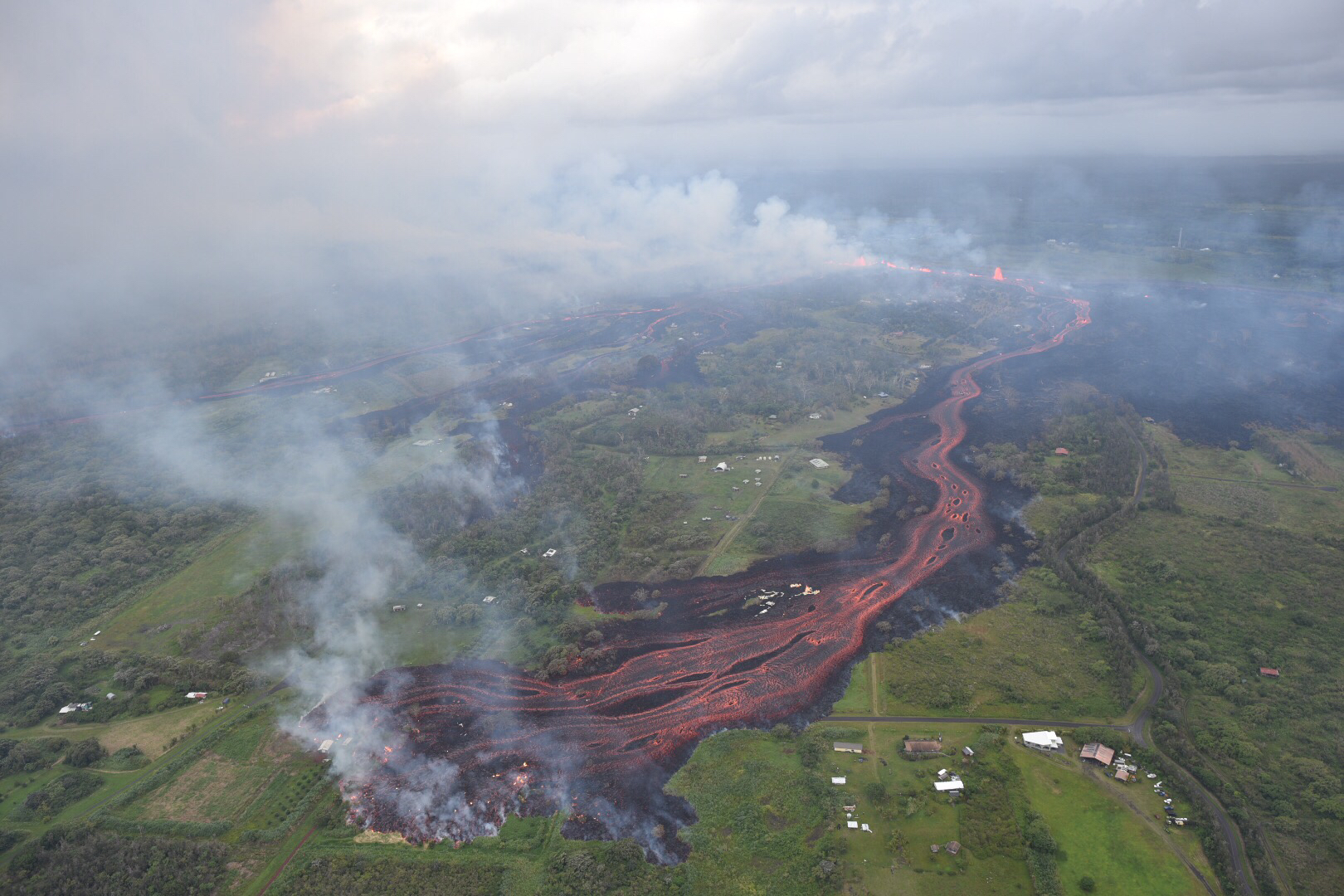
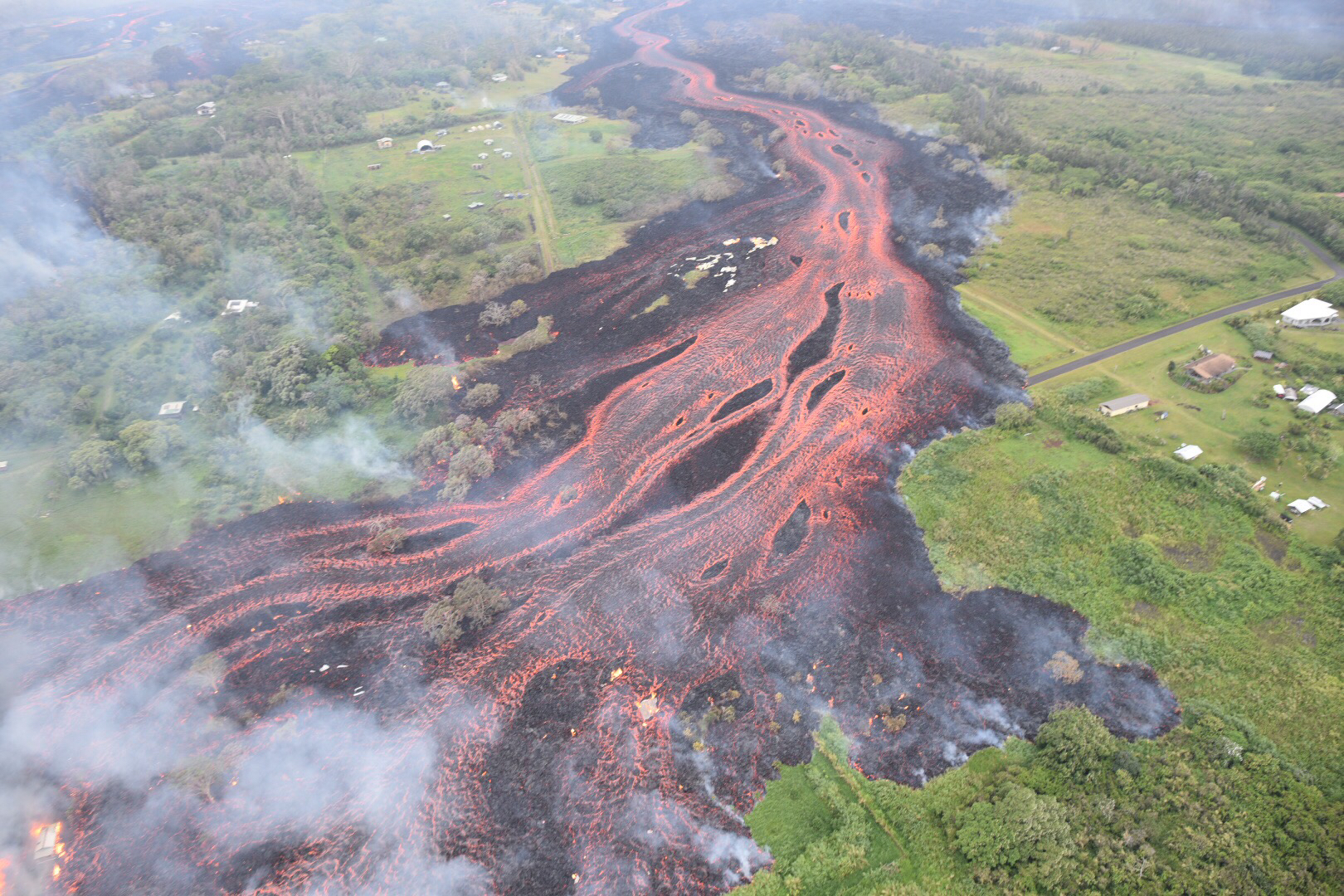
The merger happened less than a mile from the coast and created a  lava river that slowly meandered southward between Pohoiki and Opihikao Rds on its way towards the ocean. 


The lava river

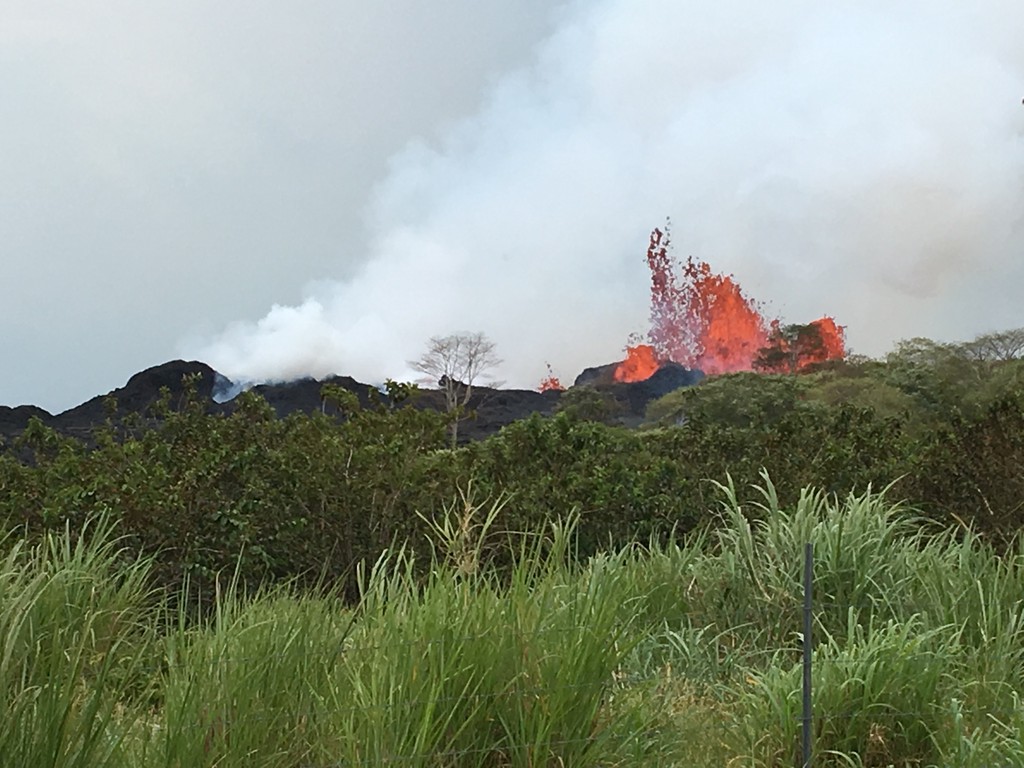
Lava fountain at fissure 22, 9:03 a.m. HST


                                                         USGS Video of lava fountain 


Meanwhile, a crack has opened under the east lava channel early Sunday morning diverting the lava from the channel into underground voids. This may stall the lava flow into the ocean.

The sudden increase in the volume of lava eruption from fissure 20 has tripled the volcanic gas emissions and SO2 concentration in the area downwind of the vents.

Seismic levels which abruptly decreased after explosive eruptions on Saturday afternoon and Sunday noon, are again slowly increasing along with continued deformation at the Kilauea summit.

A small explosion occurred at 12:55 AM at Halema'uma'u crater at Kilauea's summit. It produced an ash plume that reached about 7,000 ft and was carried by the wind to the southwest.

As the flow pours into the water and creates new land, officials are issuing new warnings about the threat for laze, the steam-like substance that rises from the ocean as the lava comes into contact with ocean water. Laze is a mix of hydrochloric acid, steam, and fine glass particles.

Laze plume travels with the wind and can cause lung damage, and eye and skin irritation.

Meanwhile, The United States Geological Survey has just updated about fissure 22 putting on a show, with lava fountains as high as 150 feet in the air.