Monday, August 1, 2016

Rainbow Shower trees in the Rainbow state of Hawaii.

Rainbow showers 

Rainbow showers 

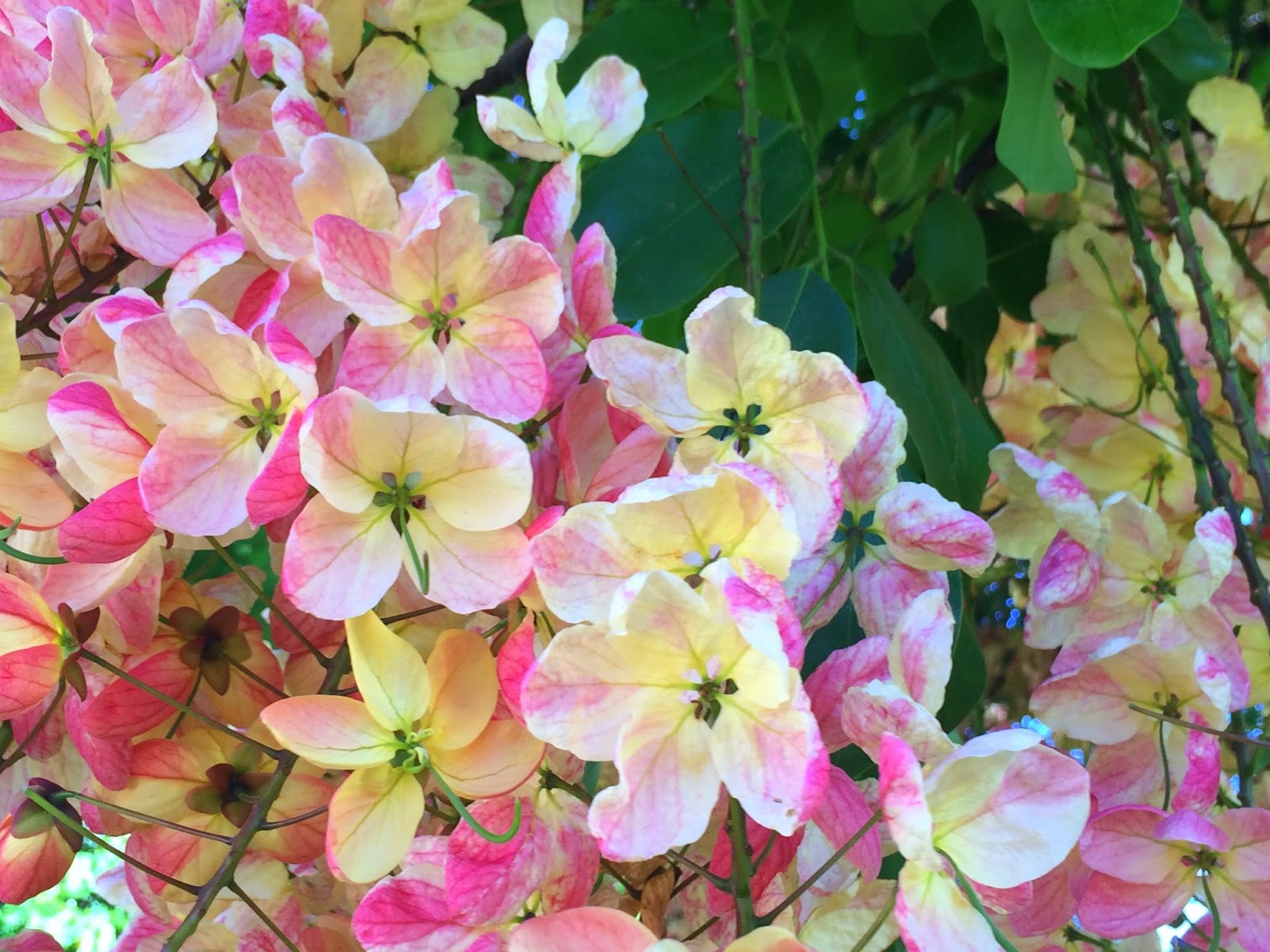
Hawaii streets are spectacular between May to November because of the blooming of Rainbow shower trees. It’s a stunning visual feast for the eyes to see such rainbow of colors like pink, yellow, magenta, white, pale peach, apricot, orange and cream cascading down the branches, dancing happily in the tropical breeze, lining the side of the roads, popping up in the parks or along the magnificent beaches. 


Rainbow  shower 

The Rainbow tree is “made in Hawaii” because it is hybrid between the golden shower (Cassia Fistula) and the pink and white shower (Cassia Javanica) from Indonesia and Sumatra.


Yellow shower 
Yellow shower

Blossoms from the Pink and white showers were pollinated by the pollen from the Indian variety in 1918 by David Haughes, head nurseryman for the Board of Agriculture of the Territory of Hawaii. The original rainbow shower tree was planted in the yard of Wilhelmina Tenny on the Lunalilo street in 1920. [1] The trees were than propagated by air layering or grafting all over the city and also the neighboring islands.


White and pale yellow showers

The original rainbow shower tree of the Wilhelmina Tenny variety still there at Daibutsu terrace of Foster Garden.[2]


White showers

Rainbow Shower tree is the official street tree of Honolulu designated by the then Mayor Neil Blaisdell in 1965.

The colorful blossoms of the shower tree are one of the visible harbinger of summer on the island where climates are not distinctly demarcated. The peak blooming period is in July and August, after which the blossoms start withering off. 


Rainbow showers

pale yellow showers linning the streets
Yellow and white showers


Rainbow shower tree 

Rainbow shower trees do not need much water and grow about 65-70 feet in height. These trees can be seen all over the Hawaiian Island but more so on Oahu and Big Island.


Rainbow shower
The other variety of shower trees seen in Hawaii are white, pink and golden yellow in color.

White and Yellow shower tree


Yellow Shower tree over a hedge
The flowering season ends in November when the petals are seen fallen like a multicolor carpet which the locals call “The Hawaiian Snowflakes”.


[1]http://fineartamerica.com/featured/wilhelmina-tenney-rainbow-shower-tree-makawao-maui-flowering-trees-of-hawaii-sharon-mau.html
[2] http://the.honoluluadvertiser.com/article/2001/Jul/29/il/il06a.html

Friday, June 3, 2016

The sausage tree (Kigelia Africana)  


The sausage tree 

The sausage tree is an unusual tree featuring 3-24" long sausage shaped fruits, hanging down from the tree by long stems. The fruit sometimes weigh as much as 15 pounds. The botanical name is Kigelia Africana, and is found  across sub-Saharan tropical Africa. It is also called as Africa's tree of life. 

It is cultivated in other tropical countries and is used as an ornamental tree in Australia, the USA and parts of South-East Asia.

The generic name Kigelia comes from the Mozambican name for sausage tree, 'kigeli-keia’.

The flowers are blood red in color, and  grow on a stalk that hangs down from the tree stems. The fragrant, nectar-rich  flowers bloom at night and are pollinated by insects, bats and sunbirds.
flower stalk 


Flowers


The sausage tree is sacred to many African communities and has a wide variety of uses in traditional and Western medicine, including commercially available skin lotions.

the sausage tree 

Bust cream 

Every part of the tree is used in herbal medicines (eg for digestive and respiratory disorders, and to treat infections and wounds. Research into its anti-bacterial, anti-fungal and anti-tumour activity is ongoing.


Both ripe and unripe fruits are poisonous to humans but the fruits can be dried and fermented, and used along with the bark to enhance the flavour of traditional beers. The seeds are sometimes roasted and eaten in times of food shortage.  The wood makes good quality timber for fences, planking, boxes and canoes. 


A short  movie on what's inside the sausage tree 


A short movie  on the iconic  tree called as  Africa’s tree of life


References: 
http://gadling.com/2010/10/21/the-inside-of-a-sausage-fruit/
https://www.hawaii-aloha.com/blog/2010/07/26/sausage-tree-in-hawaii/


Wednesday, June 1, 2016

Lantern floating ceremony Hawaii

Lantern  floating 
Lantern floating Hawaii is held annually on Memorial day on South shore of Island of O’ahu to honor loved ones and generate hope toward the future. The ceremony brings together 50,000 people on the beach, joined by millions more around the world via live broadcast.

people gathered at Ala Moana for lantern floating ceremony

The ceremony is held by Shinnyo-en, the international Buddhist community and is an example of Shinnyo-en’s fire and water ceremonies, which aim to awaken wisdom and compassion. 

On this day, people from different ethnicity and culture, all come together for collective as well as personal moment of remembrance, deliberation and acknowledgement to those who have gone before us. It is a moment in time to surround ourselves with love, kindness, peace and supporting others, even total strangers who are on the same journey as we are. 


This ceremony rejuvenate all of us  as a community  as we reach out to support others on the path of peace and healing, at the same  time  recognizing the common value we share.

Memorial day in America is a day when people remember and honor the fallen heroes, who have sacrificed their lives in line of duty. Hawai’I has largest ethnically diverse population and have  adopted the tradition of memorial day into its  culture as a day to honor and remember our loved ones.  It’s a norm in Hawaii to remember the fallen heroes, others family members and friends by placing flowers  on grave.

The first lantern floating in Hawaii  was held at Ke'ehi Lagoon on the south shore of O'ahu in 1999, but was moved to Ala Moana Beach in 2002, where it is observed every year since. The first ceremony was officiated and inaugurated  by Her Holiness Shinso Ito, Head Priest of Shinnyo-en.
Over 6000 lanterns were  given out  starting  at  10 AM and they ran out of supply two hours earlier than before. It gave people ample time to write the messages and prepare the lanterns.


According to  the Lantern Floating.com, Hawaii ,the elements of the ceremony are: 

Pū - The sounding of the pū, or Hawaiian conch shell, sanctifies the area and marks the commencement of the ceremony.

Shinnyo Taiko – The sound of the taiko calls people together. It is offered as a prayer for peace, with hope that people reach out in the spirit of creating harmony to support one another.
Oli - This Hawaiian chant calls the attention of all who are present to prepare their hearts to receive the importance of what will follow.


Hula - A visual portrayal of mele (song) or oli (chant) through dance. "Ka Lei Moana".


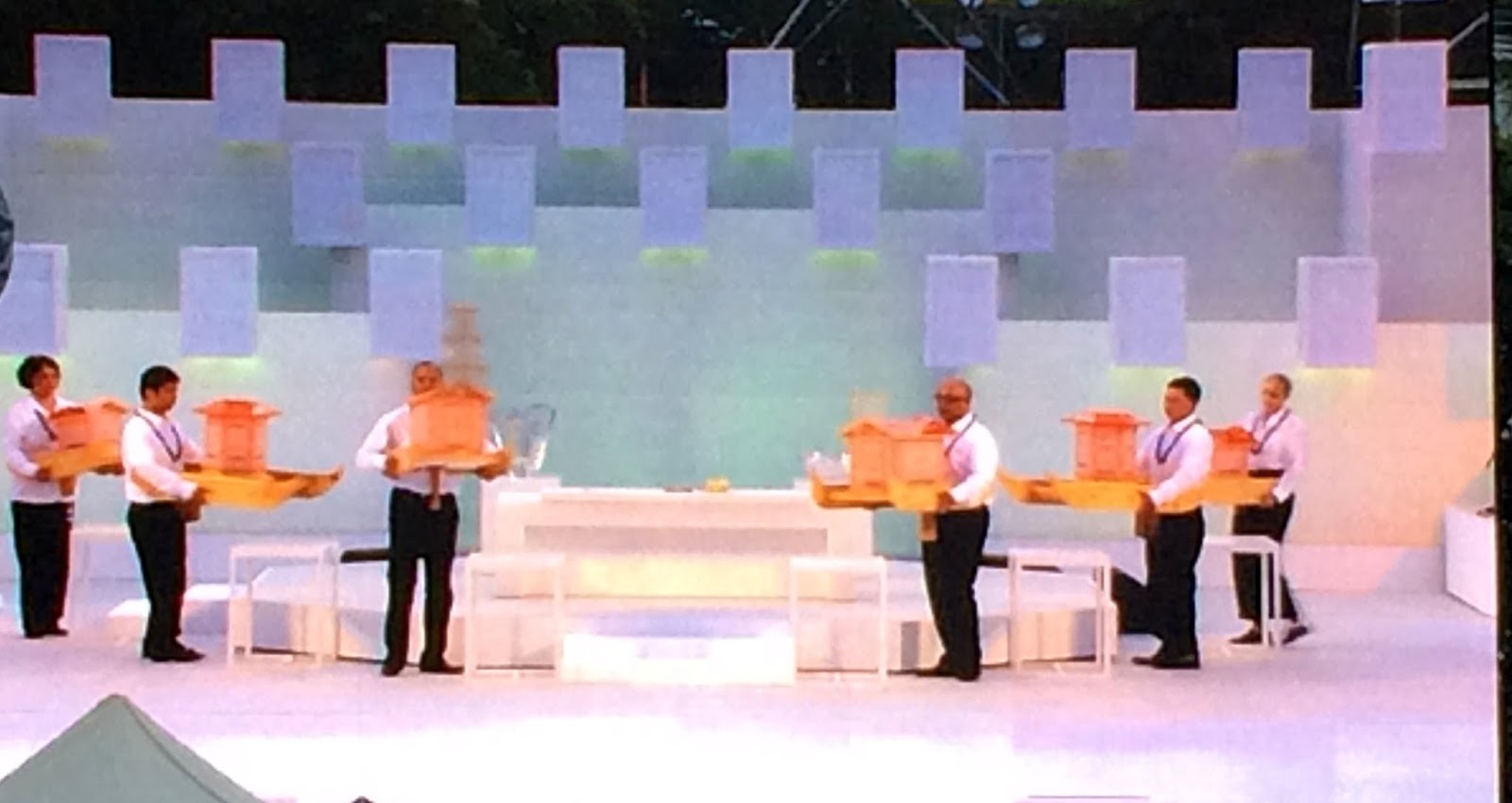
Entrance of Main Lanterns - Six large Main Lanterns carry prayers for all spirits on behalf of all people. Prayers are offered for victims of war, water-related accidents, natural and manmade disasters, famine and disease. Gratitude is offered for all - even endemic, endangered and extinct plant and animal life. These lanterns are floated with the hope of encouraging harmony and peace.


Main lantern 

Six main lanterns 

Light of Harmony - In the spirit of friendship, community leaders from various sectors symbolically demonstrate their unified commitment to creating harmony amid diversity.


Blessing and transformation – Her Holiness Shinso Ito offers a blessing of the ceremonial area, the lanterns, all who are being remembered, and all in attendance prior to the floating of lanterns.

Offering of food and water - This ritual symbolizes the offering of spiritual nourishment to the souls of those being remembered.

Strewing of flower petals – Since ancient times, flowers have adorned the path of honored ones. The scattering of flowers on the path symbolizes the love and respect that we offer to our loved ones.


Shomyo – A fusion of traditional Buddhist chant and Western choral harmony.


Ringing of the Bell - The crystal clear sound of Her Holiness Shinso Ito's bell focuses everyone's thoughts and prayers and signifies that it is time to float the lanterns.

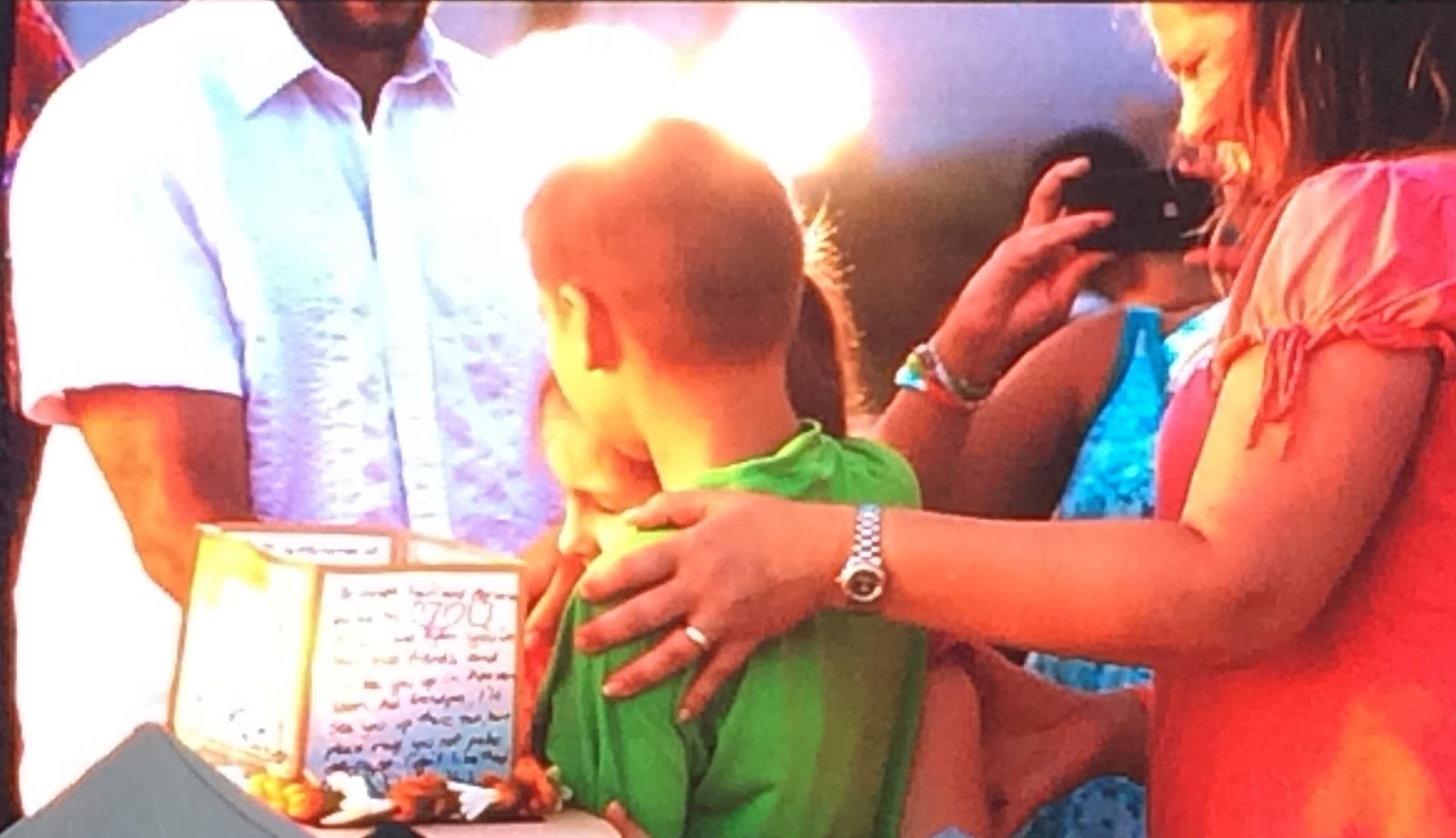
Floating of Lanterns - Lanterns are placed onto the water with wishes for the peace and happiness of loved ones past while unveiling courage and hope in the hearts of those in the present.


Under the theme “Many Rivers, One Ocean,” participants set afloat the lanterns as the sun set slowly over the pacific.

All the lanterns are collected by volunteers, refurbished and stored again for next year ceremony. 

References:


Friday, May 13, 2016

Witnessing a historic and rarest event -- The blooming of Corpse Flower


Yesterday I had the opportunity to visit the Foster Botanical Garden in Honolulu, HI. The Occasion? Being witness to blooming of one of the world’s largest and rarest flowering structures, the corpse flower also known as titan arum. The corpse flower blooms for a very short time (12 hours) and when in bloom emits a very pungent odor like a dead and decaying animal or corpse.

Corpse flower at Foster Botanical Garden, Honolulu, HI


The spathe  of  the flower 


Close up of the skirt like structure called  Spathe. 


Why the strong and pungent smell? It all comes to continuation of species.  The smell, color and temperature is for attracting insects for pollination to continue the species. Dung beetles, flesh flies and other carnivorous insects are the primary pollinators of this type of flower.


The skirt and the origin of the phallus like structure 

The corpse flower has designed a very clever way of fooling the insects into believing that it is a piece of flesh/ dead animal due to the smell, warming itself up to 98 degrees Fahrenheit (36.7 Celsius)  and the burgundy color, attracting the beetles. Eventually as the insect take-off after sitting on the flower, they have pollens sticking on their legs for pollinating other flower. Once this  task  completed the flower collapses and shrivel up.

The scientific name of the corpse flower is Amorphophallus titanium. (from Ancient Greek amorphos, "without form, misshapen" + phallos, "phallus", and titan, "giant"). The legendary Sir David Attenborough first used the name titan arum to refer to this magnificent tropical plant in the BBC series The Private Lives of Plants because he felt viewers might be offended by the plant’s Latin name, Amorphophallus titanum. The corpse flower is not a single flower but an inflorescence (a stalk of many flowers). It consists of mixture of tiny male and female flowers clumped together at the base of phallus like structure called  (spadix) surrounded by a beautiful  pleated skirt-like covering (spathe) that is bright green on the outside and deep maroon/ burgundy  inside when opened. 

The female flower precedes the male flowers to maturity, hence self-pollination is not possible, requiring the help of insects.

Life cycle of the corpse plant. Courtesy  UC Davis


Life cycle , courtesy Kew Botanical Garden, UK
The inflorescence which can grow over 3 metres (10 ft) in height rises from the tuber, which is a large spherical underground stem modified to store food for the plant. It is very large and weighs around 100 pounds. After the inflorescence withers-off, a single leaf sprouts from the tuber reaching a height of 6-7 meter and branching into numerous leaflets. Every year the leaf withers and new emerges till the plant is ready to flower again.    This  cycle continues through  40 years which is the total life span of this plant
If pollinated, the stalk grows into a large club like head of orange seeds.


The seeds of corpse plant : Courtesy  Funflower Facts.com 

The corpse flower was first discovered in Sumatra in 1878 by Italian botanist Odoardo Beccari, according to the UC Botanical Garden. The plant grows in the wild only in tropical rainforests of Asia. It is an endangered plant because of habitat destruction in most part of Indonesia, decrease in insect   population that pollinate the plant and help in seed distribution. Indonesia has probably lost 72% of its native rainforests and the deforestation continues.

The burgundy Spathe 

The plant is very difficult to cultivate and only handful of places across the globe have been successful in doing so! It also requires 7-10 years of vegetative growth before blooming for the first time. There are about 100 cultivated corpse plants around the world.

A man smelling the corpse plant. 


Another flower with very strong odor is Rafflesia arnoldii, world largest bloom. It is a parasitic plant, with no visible roots, leaves or stem. It grows to a diameter of 3 feet, weighing as much as 15 pounds. When in bloom, the Rafflesia emits a repulsive odor, similar to that of rotting meat. This odor attracts insects that pollinate the plant.

Plants like this are magnificent and make us realize the complexity and biodiversity of the botanical world.  

References:
http://discovermagazine.com/2013/oct/15-exquisite-corpse-flowers
http://www.kew.org/science-conservation/plants-fungi/amorphophallus-titanum-titan-arum