Showing posts with label volcanic glass. Show all posts

Sunday, June 3, 2018

Vigorous lava eruption continues from lower east rift zone of Kilauea

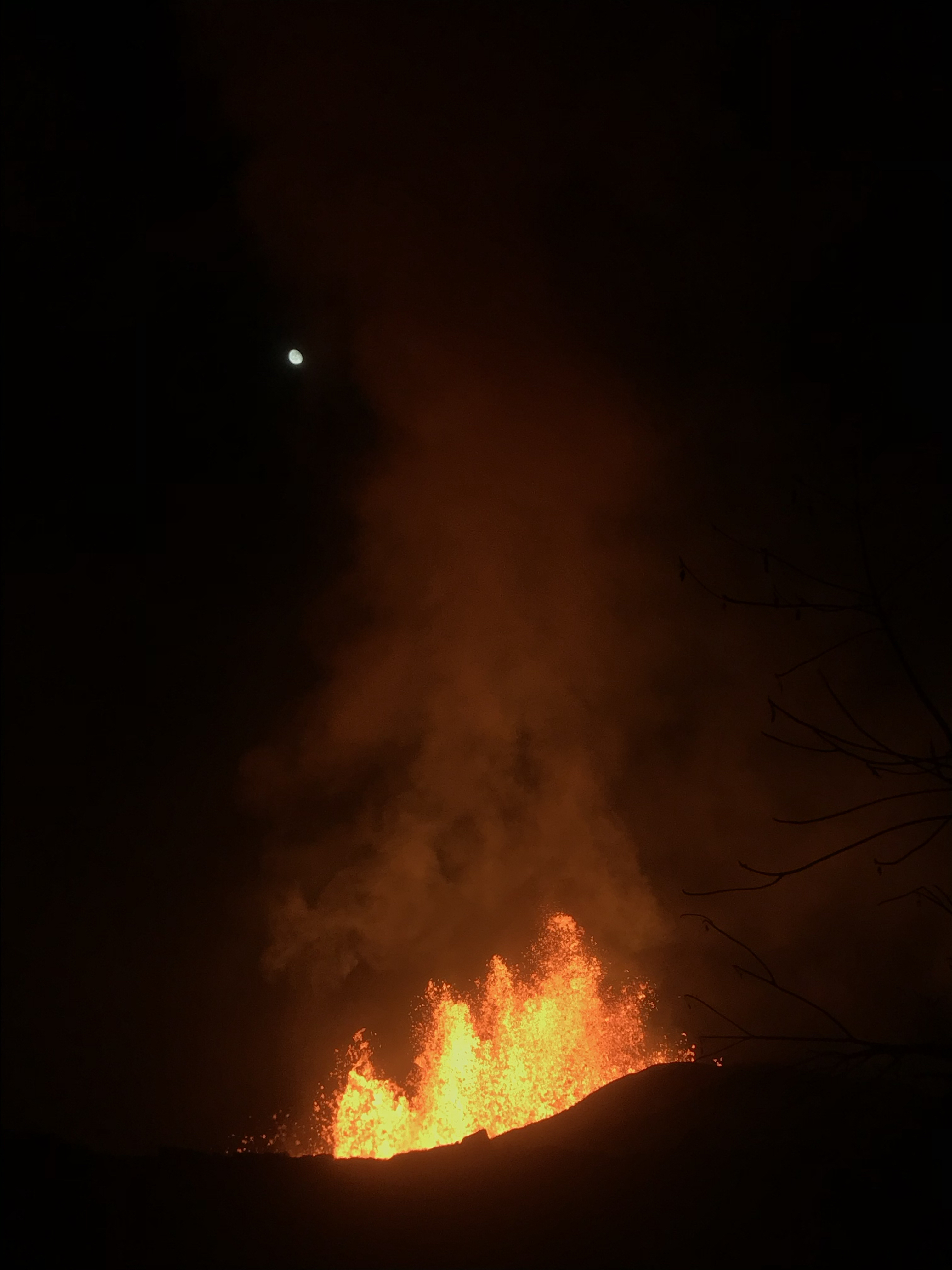
Overnight (June 1-2), fissure 8 lava fountains decreased to heights of about 50 m (164 feet). The moon can be seen in the upper left.


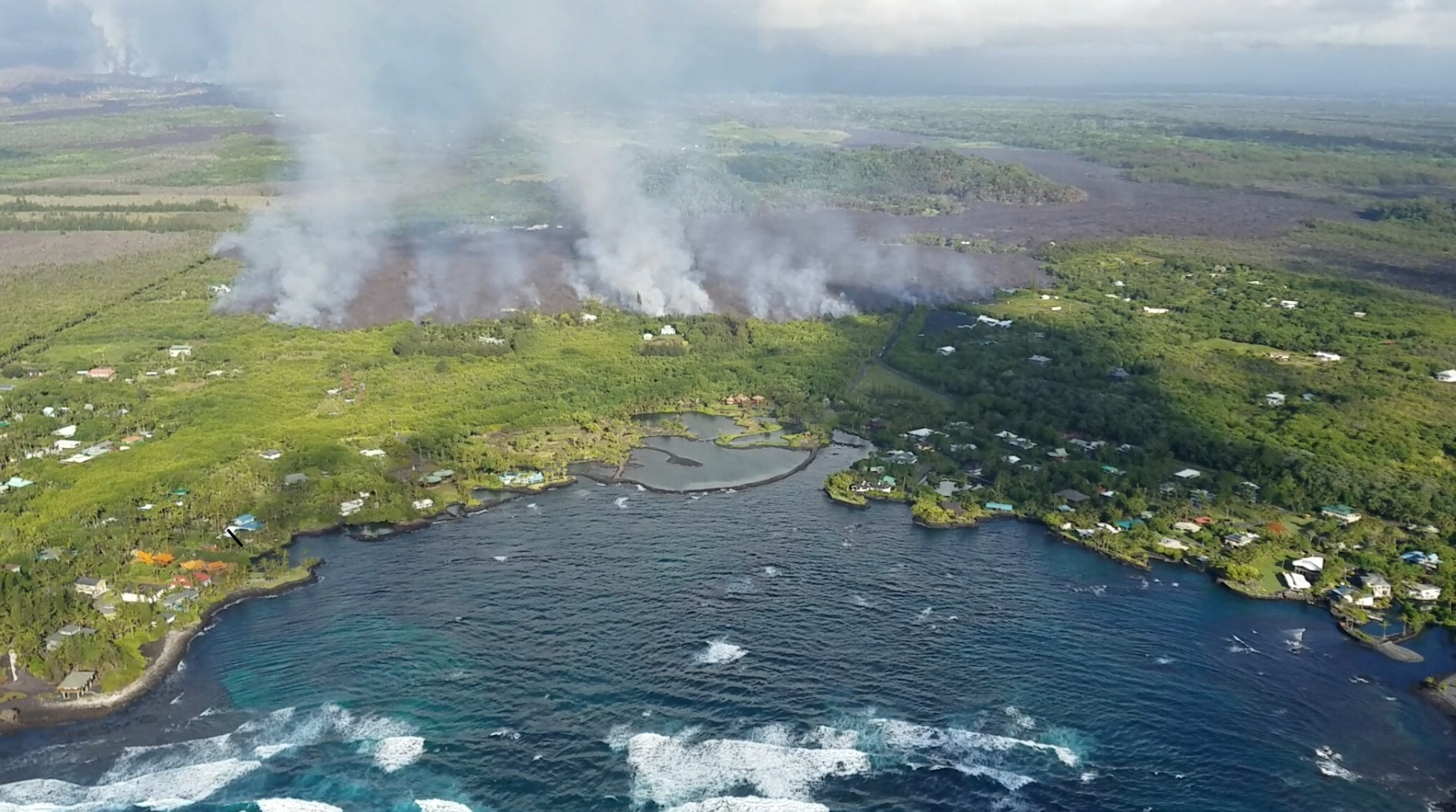
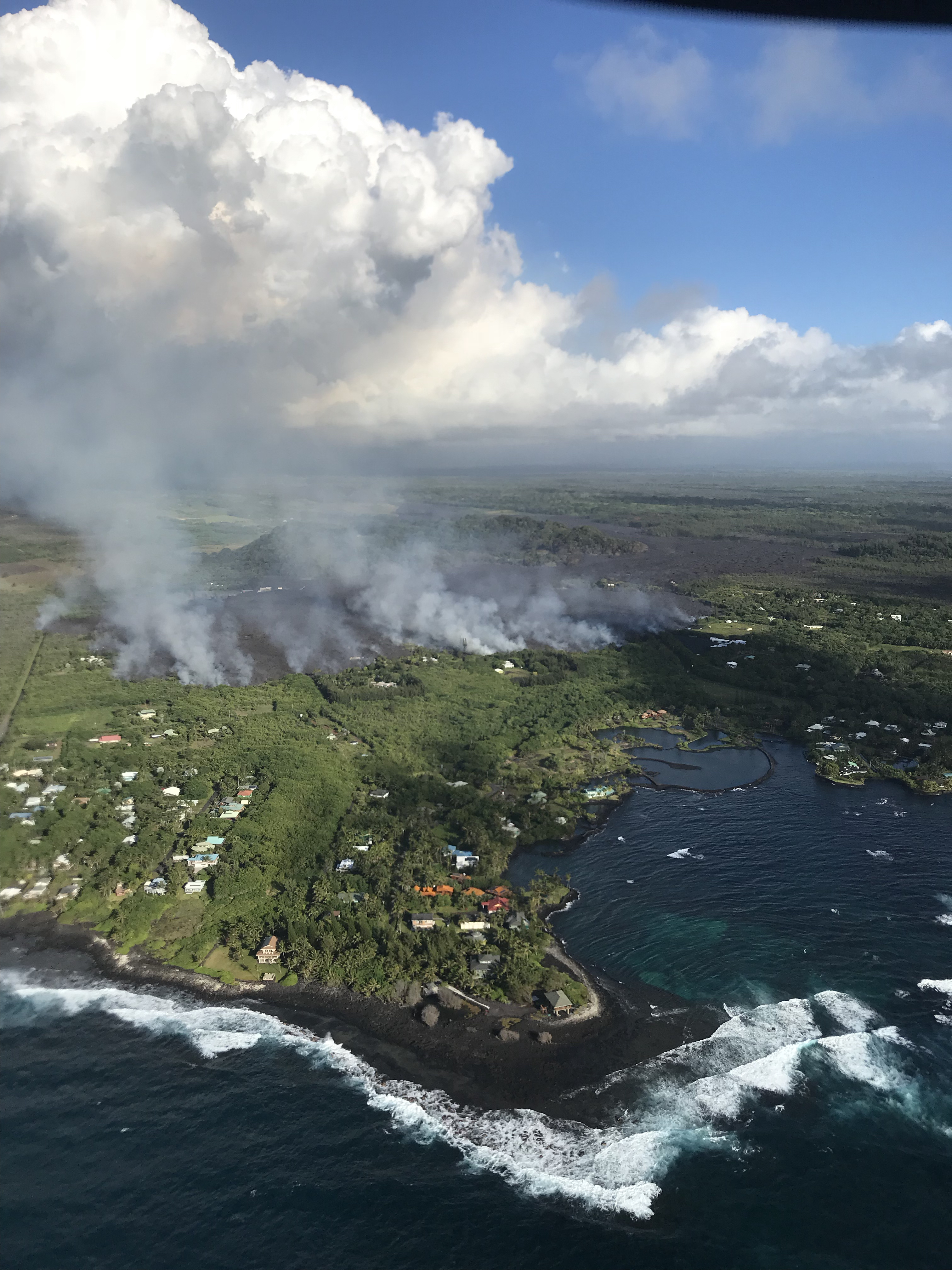
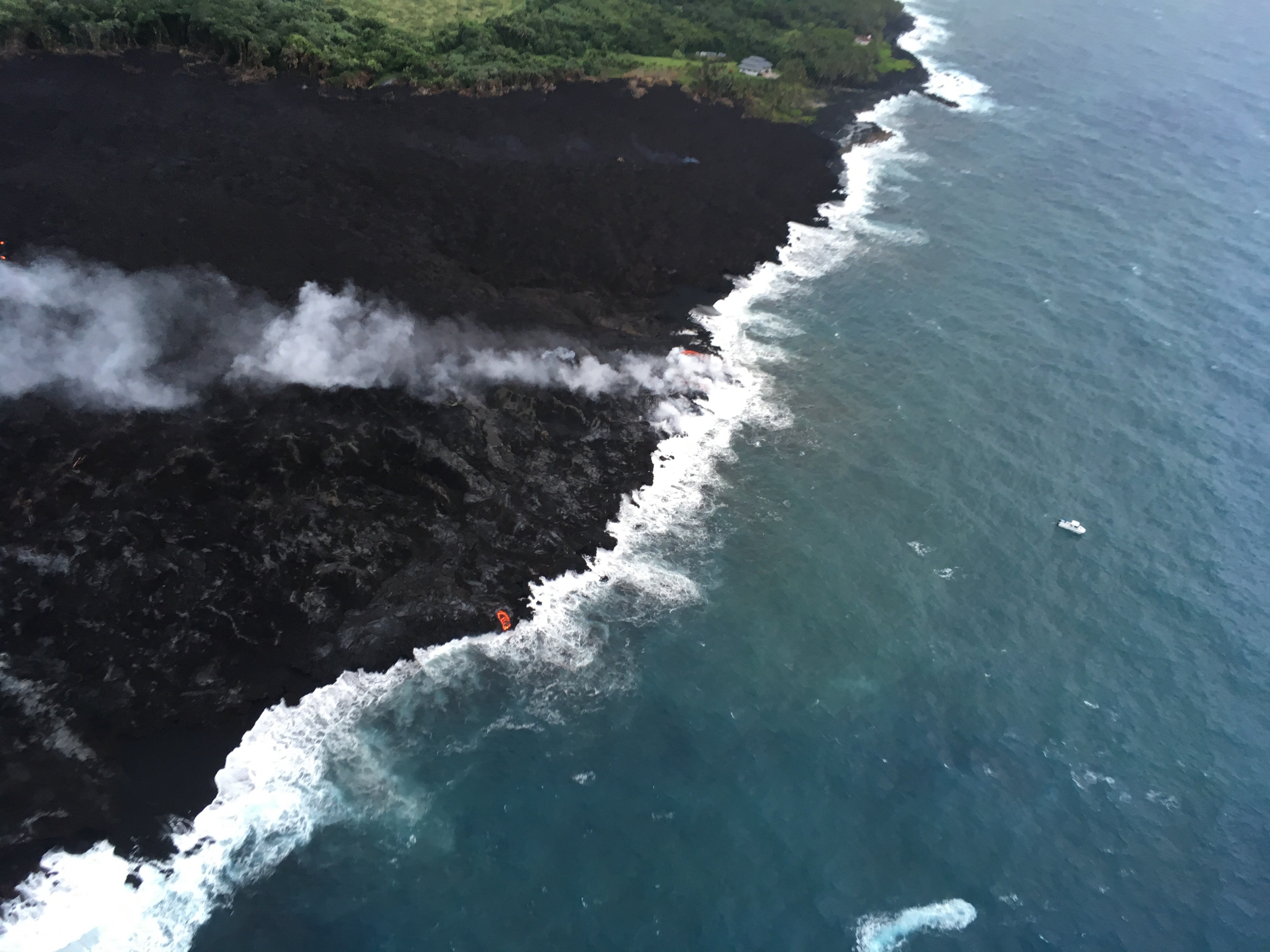
Photo from 7AM helicopter overflight, hovering offshore and looking up the flowfront. Nearly all of the front was active and advancing; advance rates were estimated at an average of 250 feet/hour (76 m/hr), and as of 7AM the flow was 500 yards (457 m) from the ocean.

This video was taken on the June 3 7AM HST helicopter overflight, hovering offshore and looking up the flow front. Nearly all of the front was active and advancing; advance rates were estimated at an average of 250 feet/hour (76 m/hr), and as of 7AM the flow was 500 yards (457 m) from the ocean.

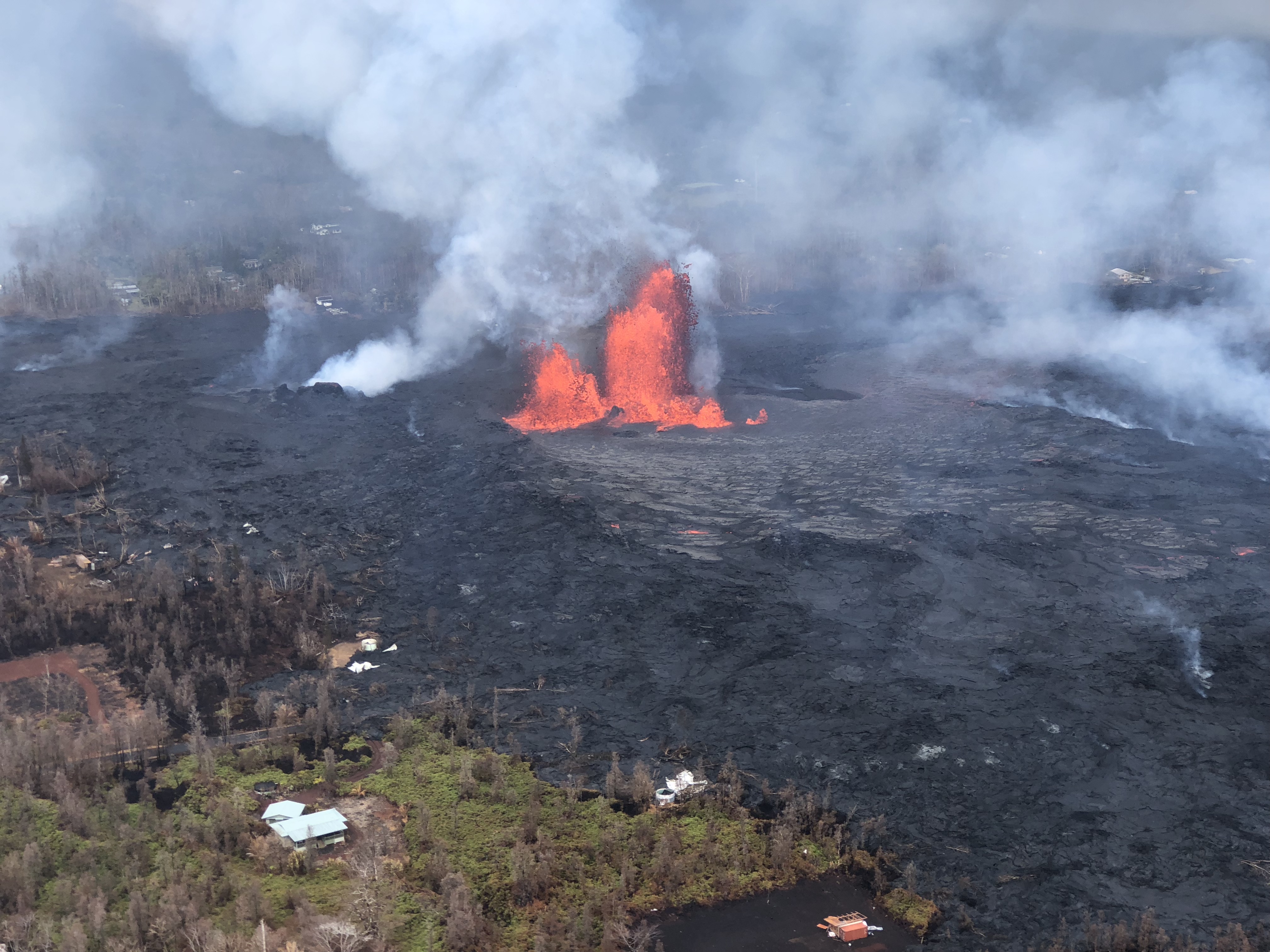
Mount Kilauea continues to erupt lava one month after it all started on May 3, 2018.  Fissure 8 is persistently fountaining since a week delivering lava northeast along Highway 132 to the Kapoho area. The lava stream was about 430 yards from the ocean at the Kapoho Bay between Kapoho Beach Road and Kapoho Kai Drive.

All other fissures are silent now, although Fissure 9 is steaming heavily.

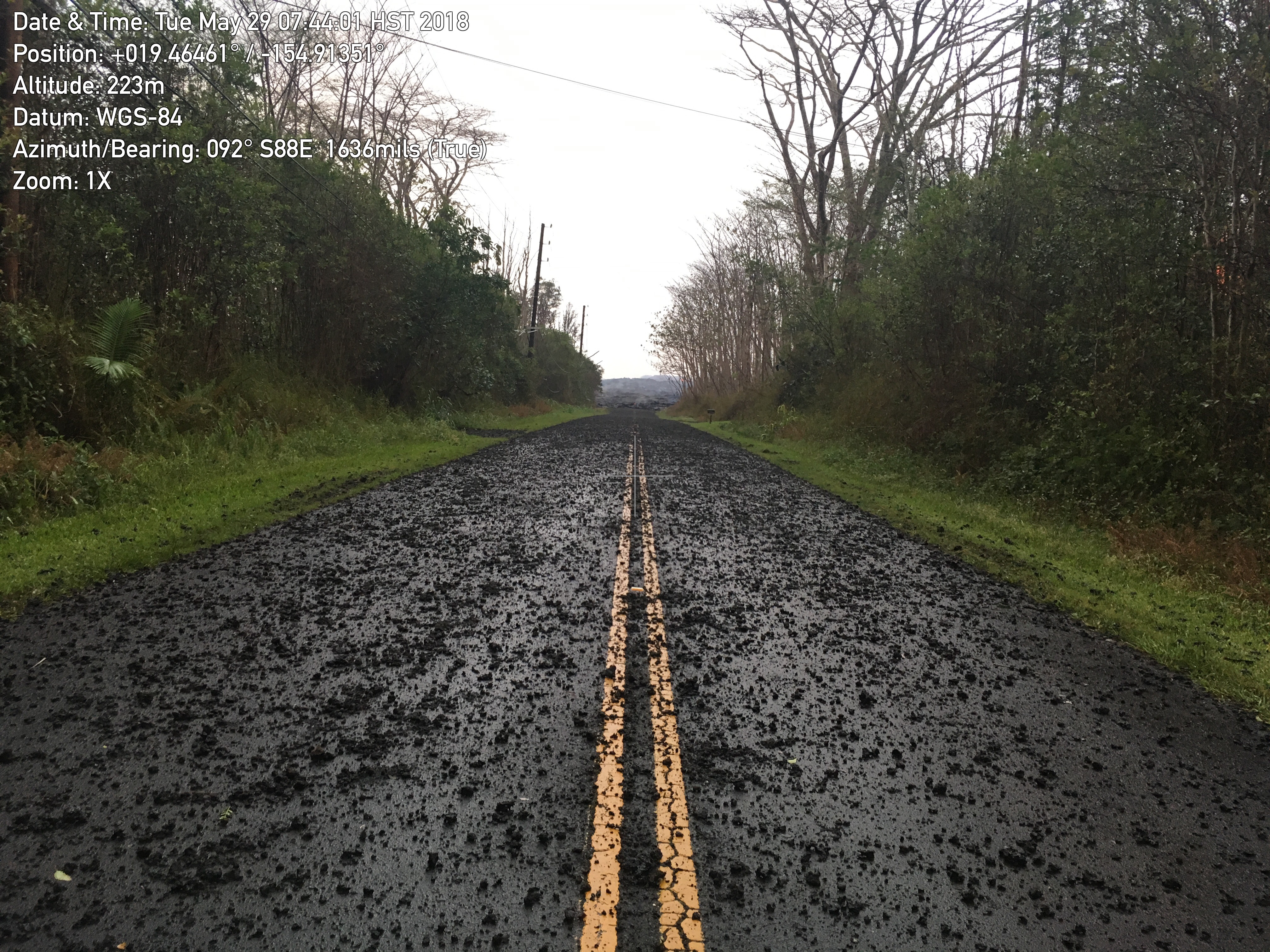
Pele's hair and other lightweight volcanic glass from high fountaining of Fissure 8 are falling downwind of the fissure and accumulating on the ground within Leilani Estates.

Earthquake activity at the summit was high overnight, and it is possible that a small explosion, much like those that have occurred during the past two weeks, will take place in the next day. Ash emissions are low as revealed by webcam views this morning. Volcanic gas emissions at the summit remain high.


Here are some of the latest photos by United States Geological Survey 
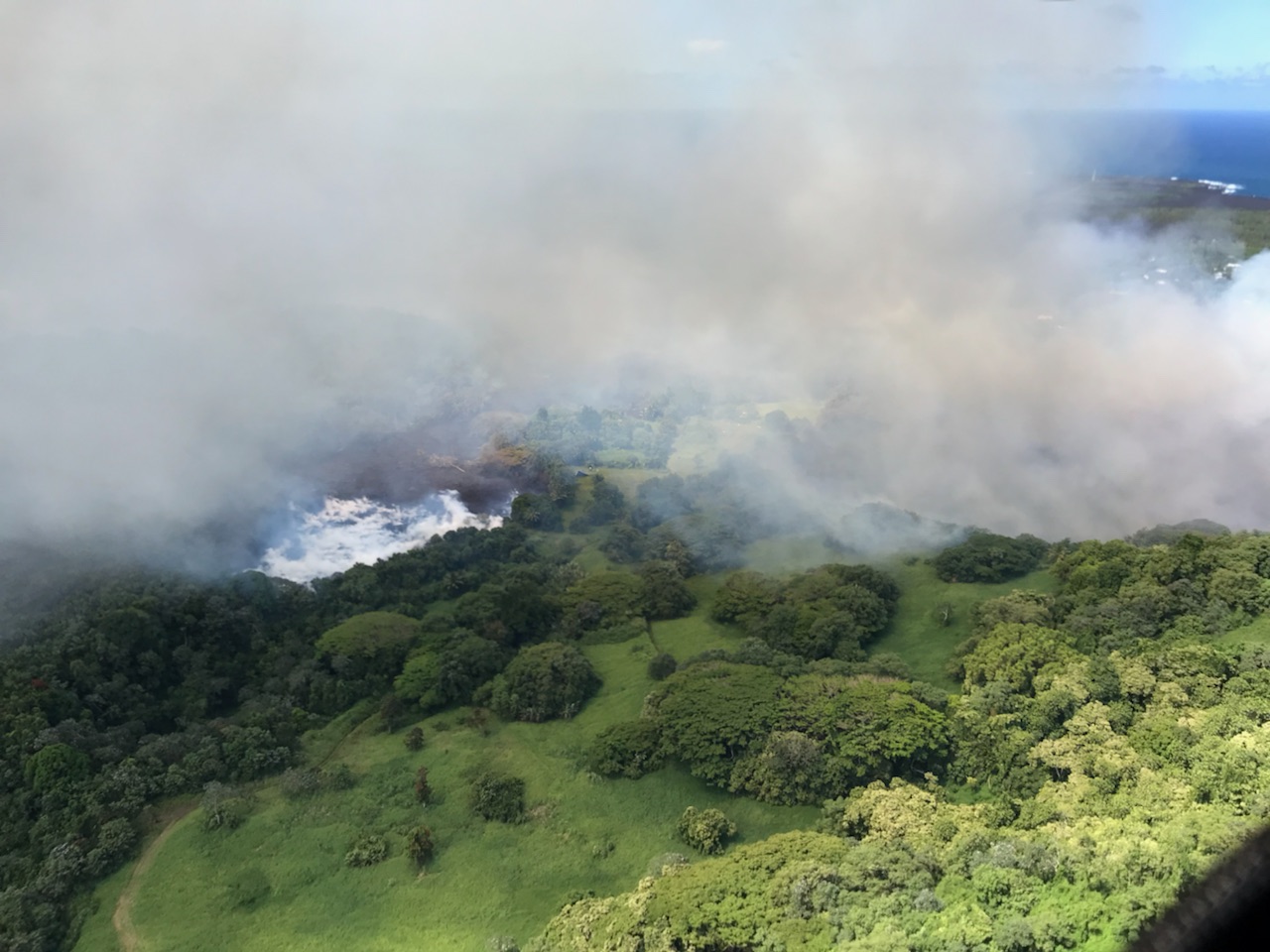
As fissure 8 lava flowed into Green Lake, the lake water boiled away, sending a white plume high into the sky—visible from afar between around 11:30 a.m. and 1:30 p.m. HST. This aerial photo, taken a couple of hours later by the Hawai‘i County Fire Department, shows still-steaming lava within Green Lake, located near the intersection of Highways 132 and 137.
Summit plume at 8:40AM HST on June 3. A slight mist in the air softens the look of the plume, which is predominantly white steam with very minor amounts of ash.

Overflight photo at 7AM HST from offshore looking up the flowfront. Nearly all of the front was active and advancing/spreading.

Overnight (June 1-2), fissure 8 lava fountains decreased to heights of about 50 m (164 feet). The moon can be seen in the upper left.


Wednesday, May 30, 2018

What’s going on with the Kilauea Volcano?


Fissure 8 was active throughout Tuesday and into Wednesday morning sending fountains of lava at a sustained height of 200 feet with multiple secondary fountains that reached 60-feet.

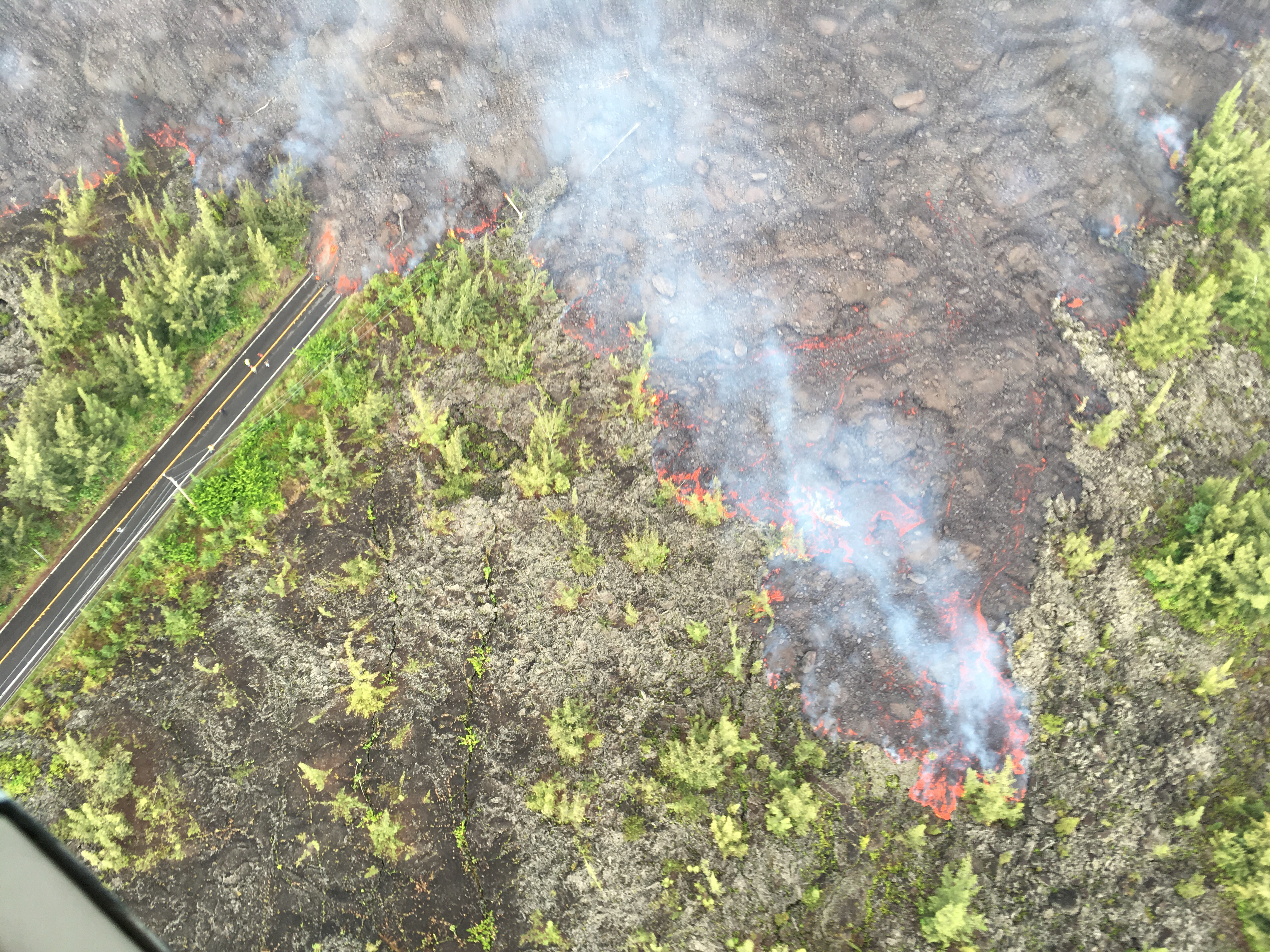
This increased activity continued feeding a lava flow that moved towards Highway 132 at the rate of approximately 600 yards/hour. The flow moved north of Highway 132 in the vicinity of Noni Farms and Halekamahina roads, advancing along the steepest descent path that could take the flow to the Four Corners area.

Adding on to yesterday’s eruption, flow from fissure 18 increased further moving downslope toward Highway 137 at rates of less than 100 yards per hour. Overnight, sporadic bursts of activity were also observed from Fissures 7 and 15.

Pele's hair and other lightweight volcanic glass from high fountaining of Fissure 8 are falling to the west of the fissure and continue accumulating on the ground within Leilani Estates. Winds may waft lighter particles to greater distances. Residents are urged to minimize exposure to these volcanic particles, which can cause skin and eye irritation similar to volcanic ash.

On the other hand, Kīlauea Volcano Summit saw relatively few activities on Tuesday and into Wednesday. Ash continued to erupt intermittently from the vent within Halemaʻumaʻu crater, but vertically high ash plumes were not recorded.

USGS warns that explosive events that could produce minor amounts of ash fall downwind are possible at any time. Volcanic gas emissions at the summit remain high and will combine with wind conditions to produce widespread vog across the Island of Hawaii on Wednesday.


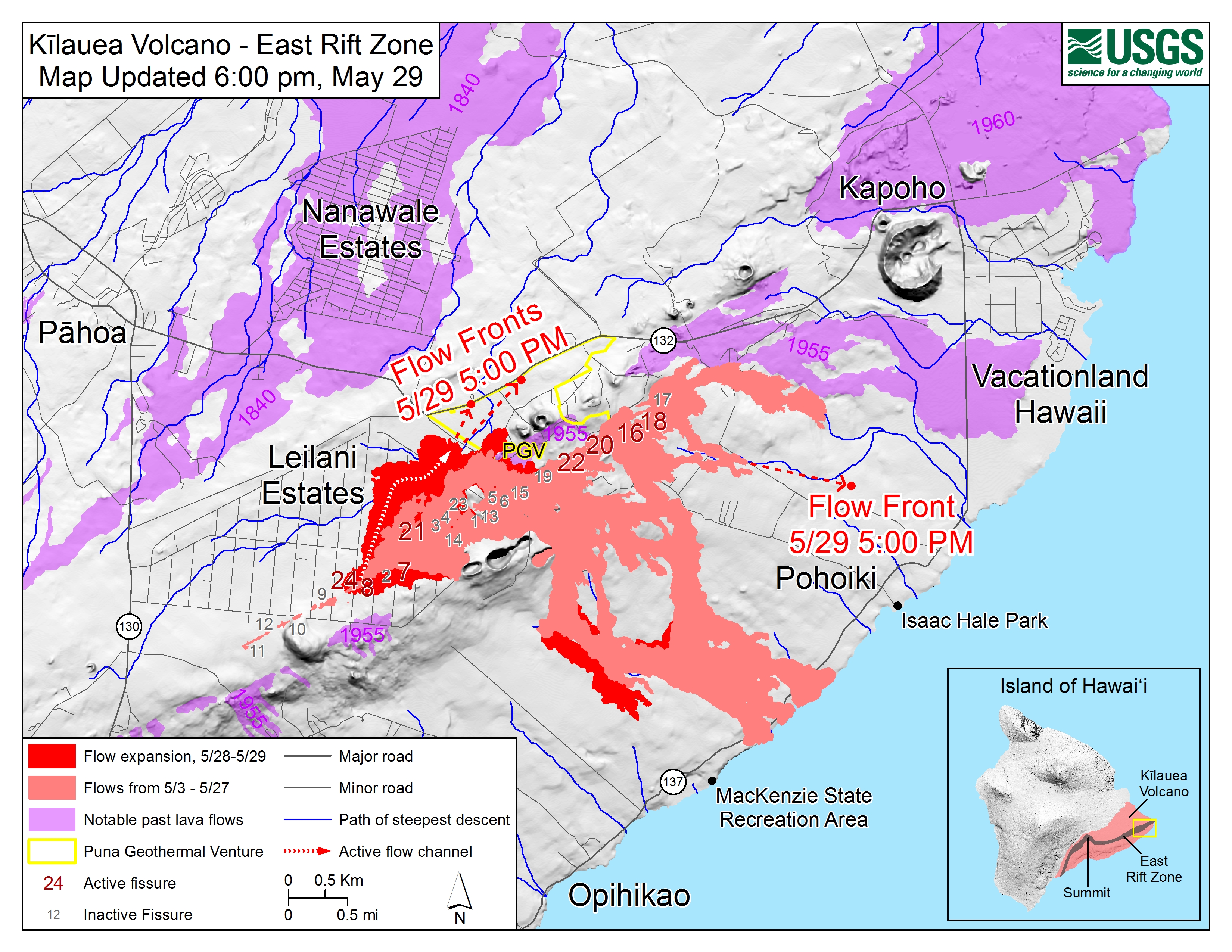
Kīlauea Lower East Rift Zone Fissures and Flows, May 29, 6:00 p.m. HST. Shaded purple areas indicate lava flows erupted in 1840, 1955, 1960, and 2014-2015.
Map Courtesy USGS - Hawaiian Volcano Observatory


Tuesday, May 29, 2018

Fissure 8 reactivated to create 200-feet high lava fountains


Lava eruption and gas emission continue unabated from the lower East Rift Zone (LERZ) fissure system in the area of Leilani Estates and Lanipuna Gardens. Today, fissure 8 remained very active, at times fountaining to the height of 200-feet. The lava flowed atop the Fissure 8 ʻaʻā flow that was active Sunday night/Monday morning to cross the highway 132 just before 2 pm HST Tuesday.

This voluminous activity of fissure 8 has produced Pele's hair and other lightweight volcanic glass that is being transported downwind and falling to the west of the fissure.

Tuesday also saw weak activity at fissure 18 and 19, but fissure 18 eruption has created a lava channel which has advanced 1.6 miles towards the coast.

Ash and gas eruption are continued from the summit, while ocean entry of lava has diminished significantly as viewed from this overflight photo.


Tephra (airborne lava fragments) erupted by the high lava fountains of fissure 8 was carried downwind, where the frothy rock fragments fell on Leilani Street, just past Kupono Street, in the Leilani Estates subdivision. Courtesy: USGS

Here is a video of fissure 8 reactivation